A. T. Fomenko
THE HISTORY OF THE MUSIC CLUB “VEAF-TOPAZ”
OF THE FACULTY OF MECHANICS AND MATHEMATICS OF MOSCOW STATE UNIVERSITY
At the beginning of 1963 I, then a first-year student of the Faculty of Mechanics and Mathematics of Moscow State University, organized and for many years (about twenty) directed — right up to the end of 1981 — the student music Club “Veaf-Topaz” at the Faculty of Mechanics and Mathematics of Moscow State University. It played a great role in the life of our faculty. Quite often I am asked about its history. That is precisely why today, in April 2009, I decided to describe this story briefly. I shall begin with a brief “note” written by me long ago, back in 1976, for our faculty newspaper “Za peredovoy fakultet”. Then I shall supplement it with other information on the basis of the “Chronicle of the Club”, which has been preserved in my archive. I should say at once that I myself have no musical education, I do not play any musical instrument, but I loved music and had a fair idea of the history of many musical masterpieces and of their creators. In general, many professional mathematicians love music, and probably for that very reason a suitable atmosphere for the emergence and long existence of a music Club developed at the Faculty of Mechanics and Mathematics of Moscow State University — a Club that became very popular.
“Brief information about the music Club VEAF-TOPAZ (1963–1976). Faculty of Mechanics and Mathematics of Moscow State University”. A. T. Fomenko (1976).
The club “Veaf-Topaz” was organized by A. T. Fomenko in 1963 (at first, for five years, the Music Club was called VEAF). It was conceived as a voluntary society for the dissemination of musical knowledge among students. The organizational form was as follows: listening to gramophone recordings (or tape recordings) in a fairly large room, preceded by a short lecture on the history of the musical work in question. Most often the lectures were given by A. T. Fomenko. For many years the Club has been (and is now) a purely student and postgraduate organization. As its main aim the Club chose the promotion of the works of the musical classics — Russian and foreign. For many years the club “Veaf-Topaz” united students and postgraduate students of the Faculty of Mechanics and Mathematics of Moscow State University. By the way, about the name of the Club. Starting from 1963 I was actively helped by the student Vitya Erokhov. After thinking it over, we decided to name our Club as follows: VEAF, that is, by the first letters of our names and surnames: V(itya) E(rokhov) A(natoly) F(omenko). The result seemed euphonious — VEAF. Under that name the Club worked for several years. Then, when the membership of the initiative group changed, a new name appeared, namely TOPAZ. It was formed from the names and surnames of the members of the organizing committee of the Club at that time. Namely: TO (Tolya Fomenko) + PA (Pakhomov, Valera) + Z (Zvonkin, Sasha). (For more detail see below.) The first concerts of VEAF were held in the student dormitory on Lomonosovsky Prospekt, in building 2. At that time the initiative of A. Fomenko was supported by the student Pyotr Shlesinger. In 1964 the meetings of the Club were moved to the Main Building of Moscow State University, to Common Room B-16 (zone B, 16th floor), and also to Common Rooms B-4 and B-14, see Fig. 1, Fig. 2, Fig. 3, Fig. 4. The membership of the Club was augmented not only by Soviet students but also by foreign ones (for example, the Bulgarian Tonchev). The club “Veaf-Topaz” worked continuously for many years. During that time, up to 1976, the Club (and its initiative group) changed its membership practically completely four times. A. T. Fomenko remained its permanent director throughout the whole period of the Club's existence.
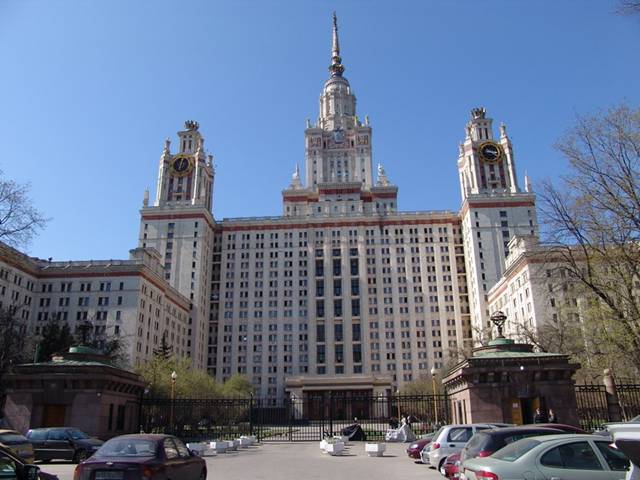
Fig. 1. A view of Moscow State University from the side of zone B, where the mechanics and mathematics students lived and where the musical evenings of the TOPAZ Club were held. Photograph of 2009.
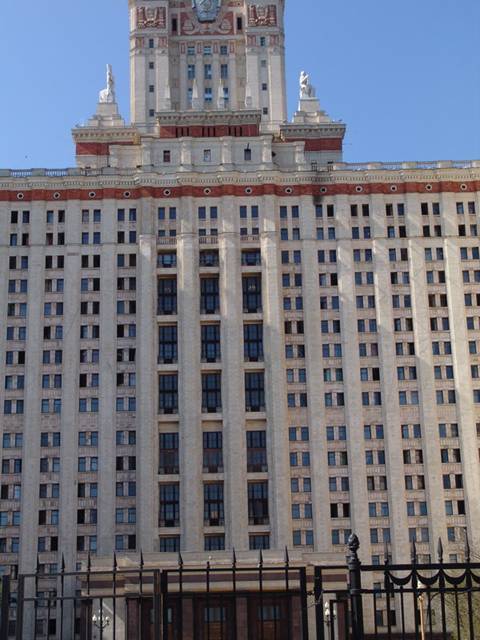
Fig. 2. Common Rooms B-14, B-16 and B-17 can be seen.
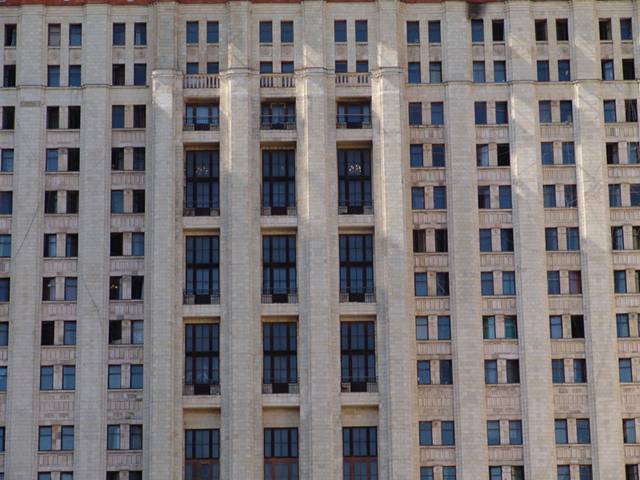
Fig. 3. Common Rooms B-16 and B-17 of zone B of Moscow State University.

Fig. 4. Common Rooms B-16 and B-17 of zone B of Moscow State University. Common Room B-17 is on two levels (it rises through two storeys: the 17th and the 18th), while Common Room B-16 is on one level. Common Room B-14 is also on two levels, situated on the 14th and 15th floors.
From 1963 to 1976 about 500 concerts were organized. The Club had branches (see below). Its activity declined during the summer vacations; the winter vacations, on the contrary, were marked by increased activity. The aim of the concerts was the promotion of musical classics, above all among students living in the dormitories. Students of other faculties, for example physics and law, also took part — even those who lived in other zones (buildings) of the Moscow State University dormitory system. The main core, however, was always made up of mechanics and mathematics students. The first initiative group of the Club, 1963–1967: Tolya Fomenko (director), Vitya Erokhov, Valera Pakhomov, Tonchev. The second initiative group, 1967–1973: Tolya Fomenko (director), Valera Pakhomov, Volodya Kuznetsov, Sasha Zvonkin, Yura Lezner, Yura Arpishkin, Zhenya Poletsky. The third initiative group, 1973–1975: A. T. Fomenko (director), Vera Savelyeva, Grisha Schwarz. The fourth initiative group, 1975–1976: A. T. Fomenko (director), Grisha Schwarz, Marat Zamaletdinov, Andrei Levkin. The Club created its own record library — a collection of rare recordings, one of the richest in Moscow University. Great attention was paid to the quality of the musical evenings: good recordings (records, tapes), good equipment, well-prepared lectures. After each evening many participants stayed on for tea and coffee. In 1964 the Club established close contacts with Academician P. S. Aleksandrov, which led to the appearance within the Club “Veaf-Topaz” of a special series of evenings widely known as the “Aleksandrov Tuesdays”. P. S. Aleksandrov not only placed his record library at the Club’s disposal but repeatedly gave highly informative lectures on the history of musical classics. These evenings attracted a large audience. The outstanding personality of P. S. Aleksandrov always attracted students. From 1965 onwards the Club’s meetings were held mainly in Common Room B-16. Several times TOPAZ organized evenings with the participation of Academician A. N. Kolmogorov. They too drew a large audience. In 1969 the “Topaz” Club established close contacts with Professor G. E. Shilov of the Faculty of Mechanics and Mathematics. With his enthusiastic participation and support a cycle of evenings devoted to R. Wagner was organized. In particular, the whole cycle of “The Ring of the Nibelung” was repeated several times. Together with G. E. Shilov cycles of evenings devoted to Russian vocal classics were organized (A. Zvonkin was responsible for this branch of the Club). This branch of the Club functioned without interruption until the death of G. E. Shilov. In 1965 the Club established close contacts with Professor Yu. M. Smirnov of the Faculty of Mechanics and Mathematics (A. Fomenko was responsible for this branch). Many evenings devoted to chamber and vocal classics were held. As has been said, the form of the evenings was as follows: first a professor or a student gives a short lecture, then …
A LOOK BACK AT THE CLUB “VEAF-TOPAZ” FROM 2009
The occasion for writing these notes was the revival of the music club at the Faculty of Mechanics and Mathematics in 2009. A group of our students decided to organize a music circle. They knew something about “Topaz” but decided not to repeat its idea and to create their own. At their invitation I recently attended one of these evenings. I liked it. I felt like telling the story of our “Veaf-Topaz” in greater detail, so that the memory should not be lost. Today, in 2009, after the passage of many years, it is already possible to assess soberly the role and place of “Veaf-Topaz” in the history of the Faculty of Mechanics and Mathematics of the 1960s and 1970s. That place proved to be exceptionally bright and in demand. We, the students of that time, studied mathematics very intensively. Lectures, seminars, special courses, the library, attendance at research seminars, conversations with research supervisors. We were very tired. The 1960s and 1970s were the years of the flowering, the rise of the Faculty. The students “steeped in the mechanics and mathematics cauldron”. After an exhausting day, in the evenings, one sometimes wanted to escape from overwork. Our music Club became a romantic place to which people came as to a kind of temple (there is no exaggeration here). Our lectures and musical programmes were not only seriously thought out but, as it turned out, gave rise in people’s minds to associations and thoughts about our place in the surrounding world and in the flow of time in general. Students living in the dormitories had the opportunity, without wasting time on journeys to concert halls and the Philharmonic (and on getting tickets, which was often no easy matter), to become acquainted with unique performances of famous works. Mathematics and music are akin. That is why the success of the Club was so great, above all among mathematicians. Usually once every one or two weeks (sometimes less often), after several days of strenuous study and research work, we could immerse ourselves for a few hours in another (and at the same time kindred) world. A very attractive one. The equipment we used made it possible to achieve orchestral sound in the Common Room, the effect of being present at a genuine concert. We deliberately adjusted the volume during the listening (sometimes adding power), emphasizing those climaxes of the choir or orchestra which were sometimes inevitably “muffled” in a gramophone recording. Our concerts were mostly not “chamber” but “orchestral”. We tried to give as much information as possible. For instance, when listening to Wagner’s “Ring of the Nibelung” we projected the text of the operas (in Russian translation) onto a large screen. Before performances of the “Passions” (of Bach, for example) I read out the relevant passages of the Gospels, and sometimes passages from Bulgakov’s novel “The Master and Margarita” (from the story of Yeshua and Pontius Pilate). In a certain sense many of our evenings had a cult character. Sometimes I painted a colourful announcement-picture in gouache on a large sheet of cloth (glued together from two sheets of drawing paper). The text was placed against the background of the picture (sometimes solemn, sometimes even rather gloomy, if the subject was, for example, a Requiem or the “Passions”). It was hung on the first floor, in a prominent place, on the passage from the central, “lecture” part of the Main Building of Moscow State University to our mechanics and mathematics dormitory in zone B. Although very little time free of mathematics remained, we tried to organize our meetings “first class”. Above all, the best recordings of the most famous performers, famous orchestras and choirs. Of course, far from all the evenings were of a “mass” character, but there were many at which there was no room to move in a large dormitory Common Room, B-16 or B-14 for instance. Sometimes a hundred and sometimes two hundred people came. In front the listeners sat, while behind and at the sides they stood. And we by no means strove for “mass attendance”. It happened of itself. We invited nobody. But people were actively drawn to us. It is important that nobody directed us. The initiative always came only from us. The combination of youthful romanticism, the seriousness of the mathematical profession, an intense schedule of study and research, freedom of expression — all this was interwoven into a unique alloy. Some evenings were unique. For example, one day we listened to all nine symphonies of Anton Bruckner. We began on a Sunday morning, at about ten o’clock. We finished already at night. There was a short break for lunch. We made huge wax candles, about a metre and a half high and about ten centimetres thick. They burned throughout the concert. Strange as it may seem, when the last chords of Bruckner’s Ninth Symphony had sounded, about thirty people still remained in the hall. And throughout this grandiose concert the number of listeners varied from 40 to 60. And the point was not at all that we “wanted something exotic”. When the thoughts of a great composer pour into you continuously for several hours, this gives rise to a quite special feeling of understanding. This concert of ours “thundered” through the student community. We did not repeat it, but our principle was always this: however large a musical work may be, it must be listened to without interruptions. Even if this requires many hours.
The “Aleksandrov Tuesdays” deserve special mention. P. S. Aleksandrov’s talks were always brilliant and artistic. He knew Western European classical music superbly and had assembled a unique record library. He spoke with enthusiasm, drew the listeners’ attention to many subtleties of performance, and shared personal recollections of his meetings with outstanding conductors and performers. These evenings enjoyed exceptional popularity among the students. An important branch of our Club at the Kolmogorov boarding school was created by Valery Pakhomov. Over several years he organized very many evenings there, which became one of the centres of the intellectual life of the boarding school. A great deal of effort and enthusiasm was given to our Club by Alexander Zvonkin. It was thanks to his energy that many evenings with the participation of Professor G. E. Shilov took place. Every year, in spring, we marked Holy Week and Easter with special concerts at which, in particular, Bach’s “St Matthew Passion” or “St John Passion” were performed. Sometimes the social and Party organizations of that time made remarks to us “for religious propaganda”, but fortunately this never led to any serious “organizational conclusions”. The most striking case was this. Once I painted a large announcement (two large glued-together sheets of drawing paper) for one of the “Aleksandrov Tuesdays”, when Bach’s “St Matthew Passion” was to be performed. I depicted a huge black cross on which Christ was crucified, moreover against a rather gloomy background: an earthquake, a thunderstorm and so on. In short, it turned out impressive. We hung it on the first floor, on the passage from zone A to zone B. In the morning I was shaken awake: “Aleksandrov is summoning you to his flat” (he lived in the Main Building of Moscow State University). Agitated, I went to him. It turned out that Pavel Sergeevich had been telephoned from the Party committee of Moscow State University, to which someone from the Party committee had already brought my announcement, having taken it down. The complaint was this: religious music and painting were being propagated too blatantly at the Faculty of Mechanics and Mathematics. Pavel Sergeevich questioned me closely about exactly what was drawn and how, and then set off for the Party committee, saying: “Wait for me here”. He managed to have all the complaints withdrawn, explaining that the mechanics and mathematics students are very emotional and should not be blamed for it. On his return he reassured me but advised me in future to paint announcements more “restrainedly”. The damaged poster was not returned to us. We had to paint a new one — smaller and not so spectacular.
Once the idea came to me to introduce into the work of the Club a “New Stream” — that is what we later called this cycle of evenings. That is, to play not only the classics but also contemporary music, sometimes regarded as “pop music”. I remember how I first brought to a Club meeting recordings of the Beatles, then the rock opera “Jesus Christ Superstar”, and works by Jean-Michel Jarre. At first some members of our collective spoke out categorically against what they called “the vulgarization of the idea”. (By the way, on learning of this initiative of mine, P. S. Aleksandrov too condemned it at first). However, after several evenings of the “New Stream” the mood changed, especially since these concerts aroused keen interest among many students, who also came to our “classical evenings”. In short, the “New Stream” took a firm place in the programmes of Topaz. As can be seen from the Chronicle of the Club, some musical works were played at our evenings many times. The reasons are these. First, we liked them. And secondly, the audience was constantly renewed: some students graduated from Moscow State University, while others, newly admitted, came to us. And we again and again introduced them to outstanding musical masterpieces.
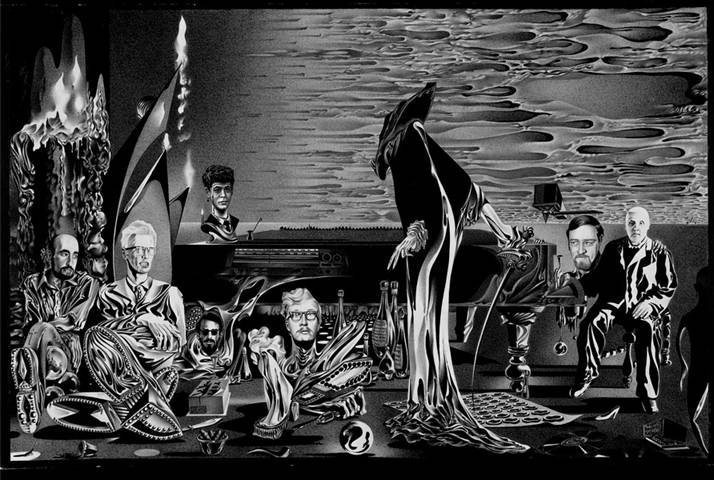
Fig. 5. A picture by A. T. Fomenko, “The Music Club TOPAZ”, drawn for the anniversary of the Club.
For the anniversary of the Club “Veaf-Topaz” I once painted a picture, which I reproduce here, see Fig. 5. It is called precisely that: “The Music Club ‘Topaz’ of the Faculty of Mechanics and Mathematics of Moscow State University”. It depicts (in a jocular manner) students and postgraduate students (mathematicians and a physicist) who in various years took an active part in the work of the club. From left to right: Alexander Zvonkin, Anatoly Fomenko, Yuri Lezner (below), Vladimir Kuznetsov (above), Enno Joon, Valery Pakhomov. The seated male figure on the right is the nineteenth-century composer Anton Bruckner, whose works were often performed and discussed at the meetings of the club. This graphic work reflects many moments from the life of the Club that are intelligible only to its members of that time. It is hardly worth speaking of them here. They have long passed into the past. In Figs. 6 and 7 — Academician P. S. Aleksandrov. In Fig. 8 — a photograph of A. T. Fomenko of 1967 (5th year, the year of his graduation from Moscow State University). In Fig. 9 — Academician P. S. Aleksandrov speaking on 29 September 1972 at a meeting of the Academic Council of the Faculty of Mechanics and Mathematics of Moscow State University in room 14-08 (at the doctoral defence of A. T. Fomenko).

Fig. 6. Academician P. S. Aleksandrov.
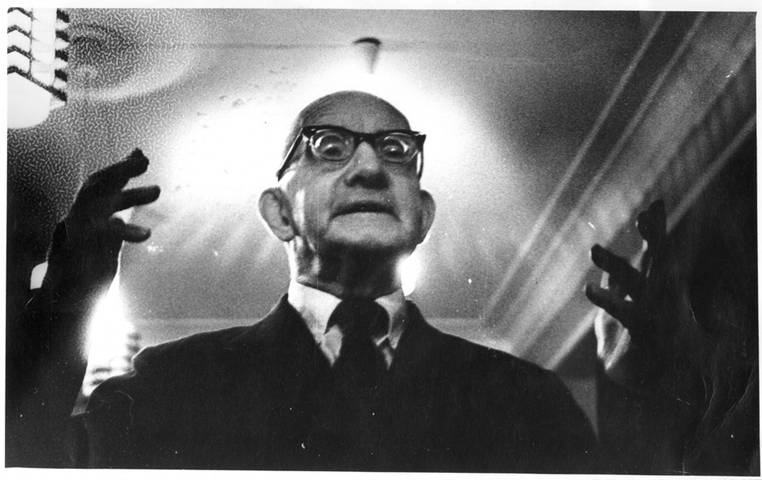
Fig. 7. P. S. Aleksandrov speaking at a meeting of the music Club TOPAZ.

Fig. 8. A. T. Fomenko in 1967 (5th year, the year of his graduation from Moscow State University).

Fig. 9. P. S. Aleksandrov speaking at the defence of the doctoral dissertation of A. T. Fomenko.
THE CHRONICLE OF THE CLUB “VEAF-TOPAZ”. What follows is far from a complete list of the evenings organized by the Club “Veaf-Topaz”. It is based on the “Chronicle of the Club VEAF-TOPAZ”, which A. T. Fomenko kept himself for many years and which new participants later continued. The original of the “Chronicle of the Club” is in the possession of A. T. Fomenko. Records have survived of only 337 concerts (all of them are listed below). In reality there were considerably more musical evenings — at least twice as many, not fewer than 700. The chronicle preserves records of 86 “Aleksandrov Tuesdays” (see below).
Season 1: academic year 1963–1964
A. Fomenko (a first-year student) founds a music Club in the student dormitory. At first the Club had no name, but soon it received the name VEAF. The name TOPAZ appeared considerably later (when the membership of the initiative group changed and V. Pakhomov and A. Zvonkin joined the Club). The very first concert of the VEAF Club took place on 17 April 1963 in the dormitory on Lomonosovsky Prospekt, building 2, in the reading room on the first floor. The assistant was Petya Shlesinger. We borrowed the radiogram from our fellow student, the German Wolf; he gladly gave it to us. About 20 people were present. The programme:
Tchaikovsky — Symphony No. 6 (cond. Mravinsky); Beethoven — “Coriolan” (cond. W. Furtwangler, see Fig. 10); Bach — excerpts from the Mass in B minor (cond. Shaw); Rossini — the overture to “The Thieving Magpie” (cond. Toscanini).

Fig. 10. The celebrated conductor Wilhelm Furtwangler. At our evenings recordings of orchestras under his direction were played many times.
Unfortunately, no further information about that academic year has survived. Here there is a gap in the Chronicle of the Club. It must be said that at first we did not understand that all the concerts had to be recorded. This helps in drawing up the programme of the Club for the future. When this was understood in due course, it turned out that much information about the work of the Club had been irrecoverably lost.
Season 2: academic year 1964–1965
Here too very little information has survived in the Chronicle of the Club. The leading lecturers: Tolya Fomenko + Vitya Erokhov + (sometimes) Tonchev.
October 1964. Common Room B-12.
Yehudi Menuhin — four violin concertos in D major: Mozart, Mozart, Brahms, Beethoven.
1964 (the date has not survived). VEAF.
Beethoven — Missa Solemnis (see Fig. 11) (cond. H. Karajan).
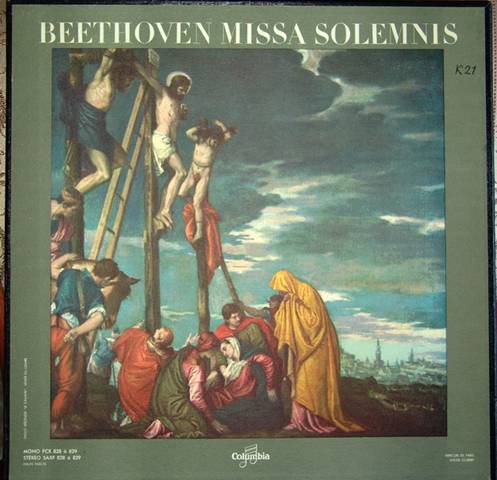
Fig. 11. Beethoven. Missa Solemnis. It was often performed at the meetings of the Club TOPAZ.
December 1964. Common Room B-17. VEAF + P. S. Aleksandrov. The radiogram was provided by Vitya Erokhov.
Vivaldi — The Four Seasons; Tartini — “The Devil’s Trill” and sonatas for violin (Milstein).
February 1965. Common Room B-12. VEAF + P. S. Aleksandrov.
Bach — St Matthew Passion (cond. Karl Richter).
February 1965. Common Room B-12. VEAF + P. S. Aleksandrov.
Bach — chamber works.
1965 (the date has not survived). VEAF.
Berlioz — the dramatic legend “The Damnation of Faust”.
1965 (the date has not survived). VEAF.
Carl Orff — “Die Kluge”.
Season 3: academic year 1965–1966.
October 1965. Common Room B-14. VEAF.
Alfred Cortot — Chopin: Etudes 1–12, Op. 20, 25; Ballades 1–4; Preludes.
October 1965. Common Room B-14. VEAF.
Conductor Sawallisch: Brahms — Symphonies Nos. 2 and 3; two overtures (Academic and Tragic); Mendelssohn — the Scottish Symphony.
November 1965. Common Room B-14. VEAF.
Anton Bruckner — symphonies: No. 3 (cond. Zoltan Fekete), No. 8 (cond. Mravinsky), No. 9 (cond. van Beinum). The evening took place by candlelight. I gave a detailed talk about Bruckner (see Fig. 12, Fig. 13). The three symphonies lasted several hours. At first there were about 30 listeners; about 15 stayed to the end. All of them liked it very much.

Fig. 12. The composer Anton Bruckner.
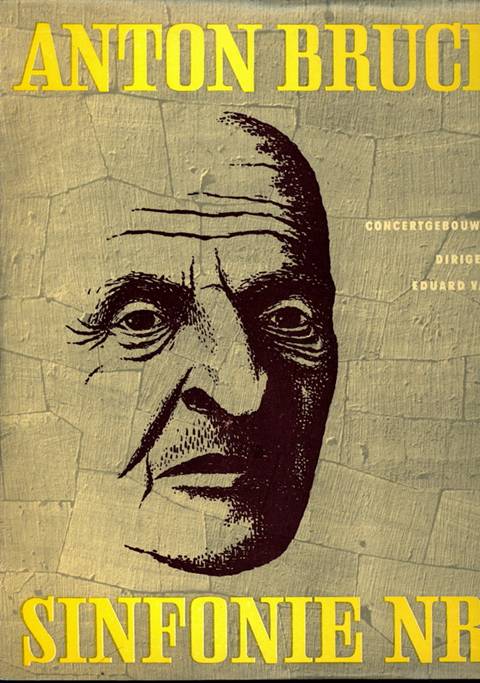
Fig. 13. The composer Anton Bruckner.
December 1965. Common Room B-14. VEAF.
Verdi — Requiem (cond. Toscanini, La Scala). By candlelight. The large Common Room was packed. Before the concert I spoke about the West European tradition of Requiems. I read out the text of the Requiem regarded as canonical. For some reason Vitya Erokhov was displeased, joked in the corner and smirked. Everyone else, on the contrary, was very absorbed.
22 December 1965. Common Room B-12. VEAF + P. S. Aleksandrov.
Purcell — “Dido and Aeneas” (in full).
January 1966. Common Room B-14. VEAF.
Haydn — the oratorio “The Creation” (cond. Kühre). The evening by candlelight. The large Common Room was packed.
February 1966. Common Room B-14. VEAF.
Liszt — Via Crucis (cond. Yurlov); Carl Orff — Carmina Burana (cond. Smetacek). I spoke about the medieval tradition of German songbooks. There were about 20 people.
February 1966. Common Room B-14. VEAF.
Artur Schnabel: Beethoven — piano sonatas 21, 22, 23 and Piano Concerto No. 3.
March 1966. Common Room B-14. VEAF.
Berlioz — Requiem (see Fig. 14, Fig. 15, cond. Charles Munch). Many candles were burning. I painted a large colourful announcement. In fact it was a picture. At the beginning of the evening I spoke about Berlioz and about the first public performance of his Requiem. There was much that was interesting. Our Common Room was packed to overflowing. Much enthusiastic emotion.

Fig. 14. The cover of the boxed set: Berlioz, “Requiem”. At the Topaz Club this recording was played repeatedly.
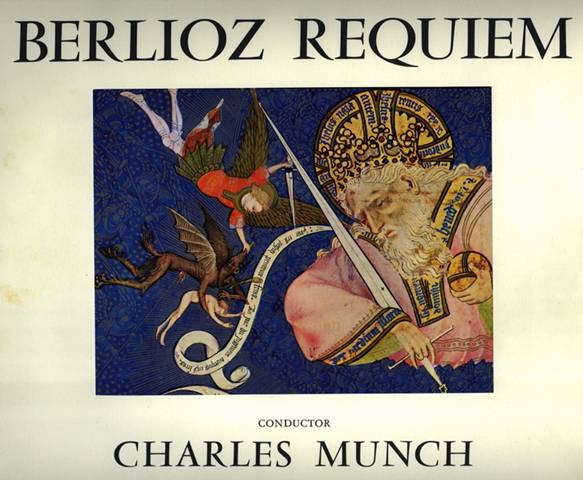
Fig. 15. The text of the Requiem (Berlioz, performed by the Boston Orchestra under Charles Munch).
March 1966. The first concert in Common Room B-16. VEAF.
Bach — St Matthew Passion (cond. Otto Klemperer, Fig. 16). The concert lasted two evenings. This performance was uncut, and therefore very long and highly interesting. Let me explain: usually the “Passion” is performed in concert halls in a strongly abridged form. We had the full version. Our concert pleased everybody so much that there were many requests to repeat it. Which we did on another day, but we chose a different performance — under the conductor Mengelberg. See the next entry.

Fig. 16. The celebrated conductor Otto Klemperer.
March 1966. Common Room B-16. VEAF.
Bach — St Matthew Passion (cond. Mengelberg). Especially for this evening we asked one of our fellow students from Moscow to lend us his magnificent (for those days) radiogram “Estonia” (a special edition), of great power and wonderful sound. We took a taxi, went to his place in Preobrazhenka, and brought the radiogram back. The next morning we took it back. To his parents (who had allowed such an expensive thing to be used) we presented a cake as a token of gratitude. At all three Bach “Passion” evenings we put out many candles. I painted an enormous announcement-picture. A crucifixion against a blazing background, the figure of Christ. O… One of the lady listeners — an elderly woman — began to express displeasure at the reading of the Gospels. I objected and explained the substance of the matter. The audience vigorously supported me. In general the Common Room was packed to the limit. Most of the listeners stood motionless for several hours (the performance was uncut and therefore very long). At the end there was applause. Right in the Common Room a “big tea” organized itself, at which many people stayed. We dispersed late, after midnight. By common consent the evening had passed magnificently. The popularity of the Club rose sharply.
April 1966. Common Room B-16. VEAF.
Bach — chorales (on the organ of the Paris cathedral of Notre-Dame); Anton Bruckner — Symphony No. 9 (cond. W. Furtwangler). This was also one of the most memorable concerts. Again large candles were burning. I made an enormous colourful announcement: a falling stone slab with a Latin text on it, and unfortunate people trying to get out from under it. I read a lecture on Bruckner, linking his work with our mathematical outlook. The Common Room was packed. People stood in the aisles and sat on the window sills.
Season 4: academic year 1966–1967
September 1966. Common Room B-16. VEAF.
Brahms — Double Concerto, two overtures (Academic and Tragic) (cond. Bruno Walter); Schubert — Symphony No. 8 (cond. Bruno Walter); Mahler — Symphony No. 1 and “Kindertotenlieder” (cond. Bruno Walter). Here on the pages of the Chronicle of the Club there is a note made by Sasha Zvonkin: “I tried to buy a ticket for this concert at the box office of the House of Culture, but failed, and did not go to the concert. I was in my second year. A. Zvonkin”. Some time later A. Zvonkin learned more about our Club, came to us and stayed for a long time, several years, becoming one of the most active members of the Club. From that moment a strong friendship has bound us to him.
October 1966. Common Room B-16. VEAF.
Bach — St John Passion (see Fig. 17) (cond. G. Ramin).
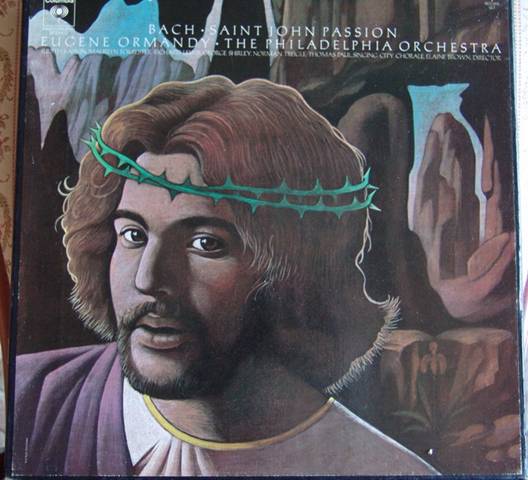
Fig. 17. Bach. St John Passion.
October 1966. Common Room B-16. VEAF.
Liszt — the symphonic poem “Tasso” (cond. Golovanov); Brahms — Symphony No. 4 (cond. W. Furtwangler); Beethoven — Parts 1 and 2 of Symphony No. 9; “Coriolan” (cond. W. Furtwangler).
December 1966. Common Room B-16. VEAF.
Dvorak — Stabat Mater (cond. Smetacek).
February 1967. Common Room B-16. VEAF.
Dvorak — Requiem (see Fig. 18) (cond. K. Ancerl).
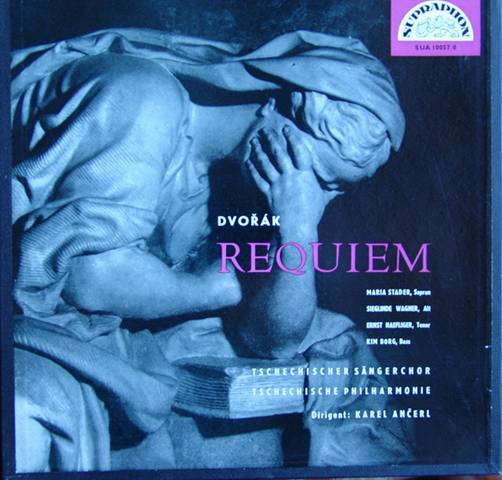
Fig. 18. Dvorak. Requiem.
13 March 1967. Common Room B-16. VEAF.
The first concert in memory of the ancient Platonic myth of Atlantis. Sibelius — Violin Concerto (Szerryg, cond. Rozhdestvensky); Anton Bruckner — Symphony No. 3 (cond. Sanderling). I spoke about the West European tradition of the 17th–19th centuries of idealizing the myth of Atlantis (Blavatsky and others). Some composers too took part in this intellectual movement.
14 March 1967. Common Room B-16. VEAF.
The second concert in memory of the ancient Platonic myth of Atlantis. Beethoven — Symphony No. 3 (cond. O. Klemperer); Schoenberg — Verklarte Nacht (cond. Svetlanov); Rachmaninoff — The Isle of the Dead (cond. Svetlanov); Wagner — the Funeral March from the opera “Gotterdammerung” (cond. Svetlanov). Large candles were burning. The Common Room was packed. Erokhov and I were in formal black suits. I gave a lecture and spoke about the mythology of Plato’s Atlantis, about the Scandinavian borrowings, about the German legends, about Wagner. The audience reacted very emotionally — many questions. After the concert people came up and thanked us.
25 April 1967. Common Room B-16. VEAF + Yu. M. Smirnov. A huge crowd.
The Mozart memorial concert. Mozart — Organ Mass (choir and orchestra of Bavarian Radio, cond. Schrams), Mozart — Coronation Mass (choir and orchestra of the Berlin Philharmonic, cond. Forster), Mozart — Laudate Dominum. Ave Verum (choir and orchestra of the Berlin Philharmonic, cond. Forster, soloist Annie Schlemm), Mozart — Requiem (the original version) (male and children’s choirs, Vienna Choral Society, cond. Josef Krips). We wanted to set up large candles, but Yu. M. Smirnov for some reason refused. We, of course, did not insist.
1967 (the date has not survived). Common Room B-16. VEAF.
Beethoven — Symphonies Nos. 3 and 5 (cond. O. Klemperer). A rare and remarkable performance. We caught this concert on the radio, on VHF. We listened to it on two radiograms at once. At this concert Volodya Kuznetsov appeared for the first time. Afterwards, however, he disappeared for a long time. But in 1968 he came again and from then on became an active member of the Club.
Season 5: academic year 1967–1968
1967 (the date has not survived). Common Room B-16. VEAF + a Frenchwoman. I do not remember her name. She was about 40; for some time she lived in the dormitory and came to our evenings, which she liked very much. Once she brought her luxurious Dual record player and a record of hers with old French music. On our part Bach — “The Art of Fugue” was played at this evening (performed by Glenn Gould on the organ).
12 October 1967. Common Room B-16. VEAF + Yu. M. Smirnov.
Brahms — A German Requiem.
November 1967. Common Room B-16. VEAF + P. S. Aleksandrov.
Schubert — Symphony No. 4 (cond. O. Klemperer); Schubert — Symphony No. 9 (cond. Toscanini); Schubert — Mass in E flat major.
November 1967. Common Room B-16. VEAF + P. S. Aleksandrov.
Schubert — Quartet in A minor (Amadeus Quartet); Schubert — Cello Sonata in A minor (Mainardi); Schubert — String Quintet in C major with two cellos (I. Stern, P. Casals and others).
December 1967. Common Room B-16. VEAF.
Carl Orff — Catulli Carmina (cond. Smetacek); Carl Orff — Carmina Burana (cond. Smetacek).
21 December 1967. Common Room B-16. VEAF + P. S. Aleksandrov.
Schubert — the song cycle “Winterreise” (Shaposhnikov).
2 February 1968. Common Room B-26. VEAF + P. S. Aleksandrov.
Schumann — “Manfred” (cond. Toscanini); Brahms — Symphony No. 4 (cond. Toscanini); Tchaikovsky — Symphony No. 6 (cond. Toscanini).
25 February 1968. Common Room B-16. VEAF.
Anton Bruckner — Symphony No. 1 (cond. V. Neumann); Stravinsky — Sophocles, “Oedipus Rex” (cond. Smetacek). I gave a talk about Bruckner and Stravinsky. I read out passages from the tragedy and recounted the original legend of Oedipus, according to Herodotus.
27 February 1968. Common Room B-16. VEAF.
Anton Bruckner — Symphony No. 4 (cond. Konwitschny) and Symphony No. 6 (cond. G. Bongartz).
5 March 1968. Common Room B-16. VEAF.
Anton Bruckner — Symphony No. 7 (cond. Jochum). It was precisely at this concert that I first brought the complete set of all the symphonies of Anton Bruckner in the magnificent performance of cond. Jochum, presented to me by the Dutch mathematician Klaas Landsman’s colleague K. Länstedt. He was doing a traineeship at the Faculty of Mechanics and Mathematics at that time, attended our concerts several times, was in great delight, and unexpectedly presented his gift. We thanked him very much, since we loved Bruckner.
19 March 1968. Common Room B-16. VEAF + P. S. Aleksandrov.
Beethoven — Piano Sonatas 12, 31 and 32 (Kempff); Piano Trio in C minor.
25 March 1968. Common Room B-16. VEAF.
Anton Bruckner — Symphony No. 2 (cond. Konwitschny), Symphony No. 3 (Z. Fekete).
31 March 1968. Common Room B-16. VEAF.
Anton Bruckner — Symphony No. 8 (Concertgebouw, van Beinum). A magnificent performance.
2 April 1968. Common Room B-16. VEAF + P. S. Aleksandrov.
Beethoven — Triple Concerto, Op. 56 (cond. B. Walter); Trio No. 5 in C major, Op. 70 (1) (A. Bush, H. Bush, R. Serkin); Symphony No. 3 (cond. B. Walter).
16 April 1968. Common Room B-16. VEAF + P. S. Aleksandrov.
Beethoven — Piano Sonata No. 11 (Kempff); Quartet No. 4 in F major, Op. 59 (1) (Vienna Konzerthaus Quartet); Quartet No. 11 in F minor, Op. 95 (Barylli Quartet); excerpts from the Missa Solemnis in D major, Op. 123 (cond. O. Klemperer).
21 April 1968. Common Room B-16. VEAF.
Rachmaninoff — All-Night Vigil (Sveshnikov Choir). At that time the listening to such works, regarded as religious (and all the more so in a student environment), was not encouraged. Moreover, it was condemned. Therefore this time we confined ourselves to small announcements hung on the five floors of our dormitory in zone B. This was a “conspiracy”. Nevertheless, word spread and very many students came.
22 April 1968. Common Room B-16. VEAF.
Bach — St Matthew Passion, Part 1 (cond. O. Klemperer).
23 April 1968. Common Room B-16. VEAF.
Bach — St Matthew Passion, Part 2 (cond. O. Klemperer). The decoration of the evening was as follows: tall and very thick coloured (black, red and white) candles, which we cast ourselves. I remember that to colour the wax red I went to a shop and asked the salesgirl in the cosmetics department for a couple of dozen tubes of bright red women’s lipstick. She was taken aback, but she sold them all the same (asking why so many). At that time I was interested in graphic art and had made many drawings for the book “Homotopic Topology” in mathematics, and several on various mythological subjects. Some of them, which (in our opinion) had a bearing on the story of the Passion of Christ, we hung on the walls of Common Room B-16 during the musical evening. There was great interest on the part of the visitors. At this concert Volodya Kuznetsov appeared for the second time, and afterwards joined the active membership of the Club. On 23 April 1968 an important event occurred: our club was left by Vitya Erokhov, in view of his graduation from the university. For more than five years he had been my first comrade-in-arms in this business and a great friend. Vitya went away (I do not remember where). Therefore the name VEAF ceased to correspond to the essence of the matter. It was necessary to reflect this change in the name of the Club, since by this time new active participants had appeared. It is precisely here, on the pages of the Chronicle of the Club, that we read a brief but interesting entry: “Zvonkin arose with the help of Pakhomov from the teachers’ room in the Boarding School”. Today it is hard for me to reconstruct the details of this event, important for the Club. Unfortunately, the quoted phrase is too short. Since Valera Pakhomov and Sasha Zvonkin were exceptionally enterprising members of the Club, the name TOPAZ came about of itself, as mentioned above: TO (from Tolya Fomenko) + PA (from Valera Pakhomov) + Z (from Sasha Zvonkin). A close friendship has bound us for many years and still binds us.
Season 6: academic year 1968–1969
3 December 1968. Common Room B-16. TOPAZ + P. S. Aleksandrov.
Beethoven — Symphony No. 9 (cond. W. Furtwangler, Bayreuth Festival Symphony Orchestra; Bayreuth Festival of 1950).
10 December 1968. Common Room B-16. TOPAZ + P. S. Aleksandrov.
Beethoven — Triple Concerto, Op. 56 (Corigliano, Leonard Rose, Hende, cond. B. Walter); Trio No. 5 in C major, Op. 70 (1) (A. Bush, H. Bush, R. Serkin).
12 December 1968. Common Room B-16. TOPAZ.
Cycle: All the symphonies of Anton Bruckner. Evening one: Symphonies Nos. 1 and 2 (cond. Jochum).
January 1969. Common Room B-16. TOPAZ.
Cycle: All the symphonies of Anton Bruckner. Evening two: Symphony No. 3 (cond. Jochum). In addition: Stravinsky — Sophocles — “Oedipus Rex”.
25 February 1969. Common Room B-16. TOPAZ + P. S. Aleksandrov.
Purcell — “Dido and Aeneas”; Vivaldi — Sonata (Milstein).
4 March 1969. Common Room B-16. TOPAZ.
Cycle: All the symphonies of Anton Bruckner. Evening three: Symphonies Nos. 4 and 5 (cond. Jochum).
5 March 1969. Common Room B-14. TOPAZ + G. E. Shilov.
Rimsky-Korsakov — the opera “The Legend of the Invisible City of Kitezh and the Maiden Fevronia”. Concerts with the participation of Professor G. E. Shilov were usually organized by A. K. Zvonkin.
11 March 1969. Common Room B-16. TOPAZ.
Cycle: All the symphonies of Anton Bruckner. Evening four: Symphonies Nos. 6 and 7 (cond. Jochum).
13 March 1969. Common Room B-16. TOPAZ.
Haydn — the oratorio “The Creation”.
18 March 1969. Common Room B-16. TOPAZ + P. S. Aleksandrov.
Beethoven — Sonata No. 4 for violin and piano (Kempff, Schneiderhan); Trio Op. 69 (Archduke) (Heifetz, Rubinstein, Fridman); Symphony No. 7 (cond. B. Walter).
25 March 1969. Common Room B-16. TOPAZ + P. S. Aleksandrov.
Beethoven — Piano Concerto No. 3 (Schnabel, Dobrowen); Piano Concertos Nos. 4 and 5 (W. Gieseking, B. Walter).
1 April 1969. Common Room B-16. TOPAZ.
Cycle: All the symphonies of Anton Bruckner. Evening five: Symphony No. 8 (cond. Jochum). In addition: Bach — chorales (organ of Notre-Dame cathedral).
8 April 1969. Common Room B-16. TOPAZ + P. S. Aleksandrov.
Beethoven — Quartets Nos. 4 and 7; Piano Sonata No. 7; Triple Concerto (B. Walter, Rose and others).
15 April 1969. Common Room B-16. TOPAZ.
Cycle: All the symphonies of Anton Bruckner. Evening six and last: Symphonies Nos. 1 and 9 (cond. Jochum). The whole cycle of these evenings passed magnificently. Very many students. Before each concert I spoke about Bruckner and about the music of that time in general. We earned numerous expressions of gratitude.
18 April 1969. Common Room B-16. TOPAZ.
Bach — St Matthew Passion. Part 1 (cond. O. Klemperer).
19 April 1969. Common Room B-16. TOPAZ.
Bach — St Matthew Passion. Part 2 (cond. O. Klemperer). Sasha Zvonkin reads passages from the Bible. Then I read out passages from Bulgakov’s novel “The Master and Margarita” devoted to the story of Yeshua Ha-Nozri. Very many listeners. At this concert the physicist Enno Joon appeared for the first time. He was from Estonia and studied at the Department of Low Temperature Physics. He joined the TOPAZ Club, and we became great friends.
22 April 1969. Common Room B-16. TOPAZ + P. S. Aleksandrov.
The concluding concert of the Beethoven cycle: Beethoven — Sonata No. 15; Quartet No. 11; Symphony No. 3 (cond. B. Walter). The end of the academic year 1968–1969. Summer 1969: touring “guest performances” of our TOPAZ Club in the Moscow State University student building detachment working in the village of Shmakovo, in the Pochinkovsky volost of Smolensk province. From 27 June to 20 August 1969. The head of this branch of the Club was Valery Pakhomov. Here is a list of some of the concerts he organized.
Bach — chorales (Notre-Dame organ); excerpts from the “St Matthew Passion”.
(cond. O. Klemperer).
C. Franck — chorales (Marie-Claire Alain, organ).
Stravinsky — Sophocles — the oratorio “Oedipus Rex”.
Beethoven — Symphony No. 9 (cond. F. Konwitschny; Gewandhaus).
Mozart — Symphonies Nos. 25 and 40 (cond. Smetacek).
Paganini — Violin Concerto No. 2 (I. Gitlis).
Sarasate — Zigeunerweisen (J. Heifetz).
Beethoven — Piano Sonatas Nos. 8 and 14 (Fridman); the “Kreutzer” Sonata.
(Gutman — violin, Fridman — piano).
Bach — Piano Concerto No. 5 (G. Gould).
Bach — Cantata No. 57 (cond. G. Ramin).
Bruckner — Symphony No. 6 (cond. Konwitschny).
Mendelssohn — Violin Concerto (Heifetz).
Handel — organ concertos, Op. 4 (Schlehta, organ).
Rachmaninoff — Piano Concertos Nos. 1 and 2 (S. Richter).
Season 7: academic year 1969–1970
October 1969. Common Room B-16. TOPAZ.
Bach — Masses (see Fig. 19).
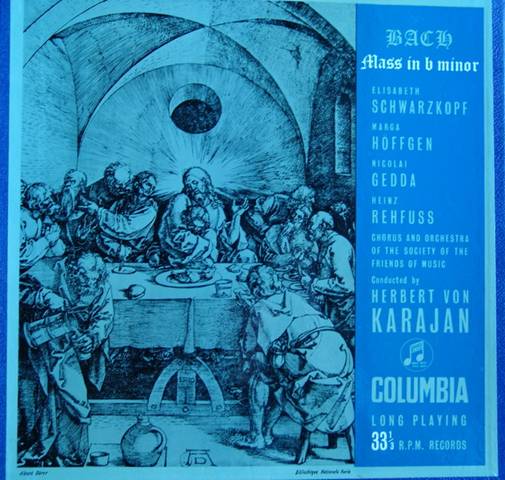
Fig. 19. Bach. Mass. Conductor Herbert von Karajan.
14 October 1969. Common Room B-16. TOPAZ.
Bach — Cantata No. 57 (cond. G. Ramin); Berlioz — Requiem (cond. Ch. Munch). An evening with candles.
October 1969. Common Room B-14. TOPAZ + G. E. Shilov. This evening and the following four were organized and supervised by Sasha Zvonkin.
Cycle: Russian poetry in Russian music. Evening one. Romances by Varlamov, Gurilev and others.
October 1969. Common Room B-14. TOPAZ + G. E. Shilov.
Rimsky-Korsakov — the opera “Kashchey the Deathless”; the symphonic suite “Dubinushka” (cond. Ansermet).
October 1969. Common Room B-14. TOPAZ + G. E. Shilov.
Rimsky-Korsakov — the opera “The Golden Cockerel”.
October 1969. Common Room B-14. TOPAZ + G. V. Shilov.
Cycle: Russian poetry in Russian music. Evening two. Romances by Alyabyev and others.
October 1969. Common Room B-14. TOPAZ + G. V. Shilov.
Cycle: Russian poetry in Russian music. Evening three.
2 December 1969. Common Room B-16. TOPAZ + P. S. Aleksandrov.
An evening in memory of the well-known mathematician Brouwer. P. S. Aleksandrov’s long speech was recorded on tape by V. Pakhomov. Vivaldi–Bach: two concertos for organ and orchestra (Notre-Dame organ, Paris; Pierre Cochereau); Cherubini — Requiem (cond. Igor Markevitch).
6 January 1970. Common Room B-16. TOPAZ + P. S. Aleksandrov.
A piano evening. Chopin — 24 Preludes (Stefanska); Schumann — 17 Fantasiestucke (Wührer); Brahms — Variations on a Theme of Paganini (Anda).
March 1970. Common Room B-16. TOPAZ + P. S. Aleksandrov.
Evening: “Lenin and music”. Beethoven — “Appassionata” (Schnabel); Symphony No. 3 (H. Karajan).
29 April 1970. Common Room B-16. TOPAZ + P. S. Aleksandrov.
Evening: “For the centenary of Lenin’s birth”. A long opening speech by P. S. Aleksandrov. Beethoven — Sonata No. 23 (S. Richter); all the music for the tragedy “Egmont” (cond. B. Khaikin); Tchaikovsky — Symphony No. 6 (cond. W. Furtwangler).
April 1970. Common Room B-16. TOPAZ + P. S. Aleksandrov.
Brahms — Piano Concerto No. 1 (piano Fleisher, cond. Szell, Cleveland Orchestra); Brahms — Sonata No. 1 for cello and piano (Wilhelm Backhaus, piano; Pierre Fournier, cello); Tchaikovsky — all the music for “Hamlet” (cond. Gauk).
Musical evenings at Boarding School No. 18 (the Kolmogorov School) during the period 1967–1969. Constantly and very successfully organized by V. Pakhomov.
Stravinsky — “Petrushka” (cond. Kondrashin); “The Fairy’s Kiss” (cond. Rozhdestvensky).
(cond. Rozhdestvensky).
Stravinsky — “Oedipus Rex” (cond. Ancerl); “The Firebird”, excerpts (cond. Rozhdestvensky); “Fireworks” (cond. Ancerl).
Rozhdestvensky); “Fireworks” (cond. Ancerl).
Stravinsky — “The Rite of Spring” (cond. Ancerl); Symphony of Psalms.
(cond. Ancerl).
Stravinsky — Violin Concerto (I. Stern); the suite “Orpheus and Eurydice” (a concert of Stravinsky’s own works).
Eurydice” (a concert of Stravinsky’s own works).
Ravel — Bolero (cond. Kondrashin); “Daphnis et Chloe”; Pavane for a Dead Princess.
Infanta (cond. Haitink, Amsterdam Orchestra).
Ravel — Concerto for the Left Hand (cond. Toscanini); Debussy — Nocturne (Gilels).
Nocturne (Gilels).
Gershwin — the suite “Porgy and Bess”; Rhapsody in Blue.
Britten — Simple Symphony; “Let’s Make an Opera”.
Anton Bruckner — Symphony No. 1 (cond. Neumann), Symphony No. 9 (cond. Furtwangler).
Furtwangler).
Beethoven — piano sonatas 8 and 17 (Richter).
Stravinsky — “Petrushka” (cond. Kondrashin); “The Rite of Spring” (cond. Ancerl).
Ancerl).
Stravinsky — Symphony of Psalms; “Oedipus Rex” (cond. Ancerl).
CYCLE — Musical Mondays (at the boarding school):
September 1969. Beethoven — Symphony No. 9 (cond. Konwitschny).
September 1969. A literary-musical evening. Stravinsky — Sophocles — “Oedipus Rex”; the text was read by Yu. V. Podlipchuk.
“Oedipus Rex”; the text was read by Yu. V. Podlipchuk.
October 1969. Bach — chorales (Notre-Dame organ); Cantatas 57 and 138.
(cond. G. Ramin).
October 1969. Paganini — Violin Concerto No. 2.
(I. Gitlis); Bach-Vivaldi — concerto for harpsichord (Z. Ruzickova); Franck — chorales (Marie-Claire Alain, organ).
October 1969. Liszt — the “Faust” Symphony (cond. R. Benzi).
24 November 1969. Liszt — Piano Concerto No. 2.
(S. Richter); Mahler — Symphony No. 1 (cond. Haitink).
8 December 1969. Bach — Concerto for two violins and orchestra in D minor.
minor; Concerto for two harpsichords and orchestra in C minor; Concerto for violin and oboe and orchestra in D minor (J. Suk, L. Jasek, Y. Menuhin, L. Goossens); A. Bruckner — Symphony No. 1 (cond. Neumann).
15 December 1969. Anton Bruckner — Symphony No. 6 (cond. Konwitschny).
22 December 1969. Bach — St Matthew Passion (cond. G. Ramin).
Season 8: academic year 1970–1971
6 October 1970. Common Room B-16. TOPAZ + P. S. Aleksandrov.
Cycle: All the symphonies of Beethoven. Symphonies Nos. 1, 2 and 5 (cond. A. Toscanini, RCA Orchestra).
13 October 1970. Common Room B-16. TOPAZ + P. S. Aleksandrov.
Cycle: All the symphonies of Beethoven. Symphonies Nos. 3 and 4 (cond. B. Walter).
27 October 1970. Common Room B-16. TOPAZ + P. S. Aleksandrov.
Cycle: All the symphonies of Beethoven. Symphonies Nos. 6 and 7 (cond. B. Walter).
10 November 1970. Common Room B-16. TOPAZ + P. S. Aleksandrov.
Evening “In memory of Tchaikovsky”. Mozart — Requiem (cond. Krips); Tchaikovsky — Symphony No. 6 (cond. H. Karajan).
December 1970. Common Room B-16. TOPAZ + P. S. Aleksandrov.
Cycle: All the symphonies of Beethoven. Symphonies Nos. 8 and 9 (cond. Karajan).
19 January 1971. Common Room B-16. TOPAZ + P. S. Aleksandrov.
Bach — St Matthew Passion. Part 1 (cond. Klemperer).
20 January 1971. Common Room B-16. TOPAZ + P. S. Aleksandrov.
Bach — St Matthew Passion. Part 2 (cond. Klemperer).
22 January 1971. Common Room B-16. TOPAZ.
Cycle: All the symphonies of Bruckner. Symphonies Nos. 1 and 2 (cond. Jochum).
24 January 1971. Common Room B-16. TOPAZ.
Cycle: All the symphonies of Bruckner. Symphonies Nos. 3 and 4 (cond. Jochum).
25 January 1971. Common Room B-16. TOPAZ.
Cycle: All the symphonies of Bruckner. Symphonies Nos. 5 and 6 (cond. Jochum); Te Deum (cond. B. Walter).
27 January 1971. Common Room B-16. TOPAZ.
Cycle: All the symphonies of Bruckner. Symphony No. 7 (cond. Jochum); Bach — chorales (Notre-Dame organ).
29 January 1971. Common Room B-16. TOPAZ.
Cycle: All the symphonies of Bruckner. Symphonies Nos. 8 and 9 (cond. Jochum). Cycle: All the operas of Wagner. TOPAZ + G. E. Shilov. The ten Wagner evenings were brilliantly organized by A. K. Zvonkin.
11 February 1971. Common Room B-14. TOPAZ + G. E. Shilov.
Wagner — the opera “The Flying Dutchman”.
11 February 1971. Common Room B-14. TOPAZ + G. E. Shilov.
Wagner — the opera “Lohengrin”.
11 February 1971. Common Room B-14. TOPAZ + G. E. Shilov.
Wagner — the opera “Tannhauser”.
11 February 1971. Common Room B-14. TOPAZ + G. E. Shilov.
Wagner — the opera “Das Rheingold”.
11 February 1971. Common Room B-14. TOPAZ + G. E. Shilov.
Wagner — the opera “Die Walkure”, Acts 1 and 2.
16 March 1971. Common Room B-16. TOPAZ + P. S. Aleksandrov.
Beethoven — Piano Concertos Nos. 4 and 5 (Gieseking); Triple Concerto (B. Walter).
18 March 1971. Common Room B-14. TOPAZ + G. E. Shilov.
Wagner — the opera “Die Walkure”, Act 3. The opera “Siegfried”, Act 1.
23 March 1971. Common Room B-16. TOPAZ + P. S. Aleksandrov.
Tchaikovsky — Piano Concerto No. 2; Rachmaninoff — Trio in D minor; Tchaikovsky — “Francesca da Rimini”.
25 March 1971. Common Room B-14. TOPAZ + G. E. Shilov.
Wagner — the opera “Siegfried”, Acts 2 and 3.
1 April 1971. Common Room B-14. TOPAZ + G. E. Shilov.
Wagner — the opera “Gotterdammerung”, Act 1.
6 April 1971. Common Room B-16. TOPAZ + P. S. Aleksandrov.
Beethoven — Piano Sonata No. 14; Piano Concerto No. 1 (Geza Anda); Tchaikovsky — “Francesca da Rimini”.
10 April 1971. Common Room B-16. TOPAZ.
Tchaikovsky — Liturgy; Mozart — Requiem (cond. Karajan); Bruckner — Symphony No. 9 (cond. Jochum).
13 April 1971. Common Room B-16. TOPAZ + P. S. Aleksandrov.
Beethoven — Trio in C minor (Fournier and others); Schubert — Piano Sonata in C minor (D. Tzechlin); Mass…
15 April 1971. Common Room B-14. TOPAZ + G. E. Shilov.
Wagner — the opera “Gotterdammerung”, Acts 2 and 3.
20 April 1971. Common Room B-16. TOPAZ + P. S. Aleksandrov.
Rimsky-Korsakov — “Scheherazade” (cond. Karajan); Tchaikovsky — “Romeo and Juliet” (cond. Karajan); Symphony No. 6 (cond. Karajan). Incidentally, Symphony No. 6 was not heard to the end: from a height of 4 cm the pickup head with its stylus accidentally fell onto the record; the record was ruined.
22 April 1971. Common Room B-14. TOPAZ + G. E. Shilov.
Wagner and world music. Wagner, Rimsky-Korsakov, Meyerbeer, Rossini, Rachmaninoff, Verdi.
8 May 1971. Common Room B-16. TOPAZ.
Honegger — Pacific 231; Mozart (a disc of singles); the Beatles — Abbey Road. This evening was unexpected for many listeners and for the whole Topaz club. The fact is that the idea came to me to introduce into the activity of Topaz a new stream — bright contemporary music. In particular, to listen to the most famous songs of the Beatles. Several members of the Club spoke out against it, but then reconciled themselves to it and afterwards became interested. P. S. Aleksandrov, on learning of our unexpected concert, expressed his displeasure to me. But I was able to convince him that this music too is very interesting and that it is useful for young people to know it.
25 May 1971. Common Room B-16. TOPAZ.
Bach — St John Passion (cond. Karl Richter).
Season 9: academic year 1971–1972
12 October 1971. Common Room B-16. TOPAZ + P. S. Aleksandrov.
Mozart — Piano Concerto No. 23; Grieg — Piano Concerto in A minor (Rubinstein); Tchaikovsky — Piano Concerto No. 1.
19 October 1971. Common Room B-16. TOPAZ + P. S. Aleksandrov.
Evening “In memory of Tchaikovsky”: Symphony No. 6 (cond. Furtwangler); Mozart — Requiem (cond. Scherchen).
26 October 1971. Common Room B-16. TOPAZ. Cycle: “New Stream”.
Music of the 20th century. L. Bernstein — West Side Story; Gershwin — An American in Paris, Rhapsody in Blue (Bernstein); excerpts from the opera “Porgy and Bess” (L. Armstrong, E. Fitzgerald).
28 October 1971. At Boarding School No. 18. TOPAZ + P. S. Aleksandrov.
A concert in honour of the nth anniversary of the first performance of Tchaikovsky’s Symphony No. 6 (P. S. Aleksandrov was especially fond of this symphony and told much about the history of its composition, in particular that it was written in memory of a boy who died, a friend of Tchaikovsky). Tchaikovsky — Symphony No. 6 (cond. Furtwangler); “Francesca da Rimini” (cond. Rozhdestvensky).
2 November 1971. Common Room B-16. TOPAZ + P. S. Aleksandrov.
Mozart — Eine kleine Nachtmusik; Haydn — Symphony No. 49; Schubert — Symphony No. 5 and a minuet. Television was present at this concert. A news item about the Topaz club was filmed. P. S. Aleksandrov and A. T. Fomenko were interviewed. The item was shown on Central Television a few days later.
November 1971. Common Room B-16. TOPAZ.
Brahms — A German Requiem (see Fig. 20); Bruckner — Symphony No. 3 (cond. Jochum).
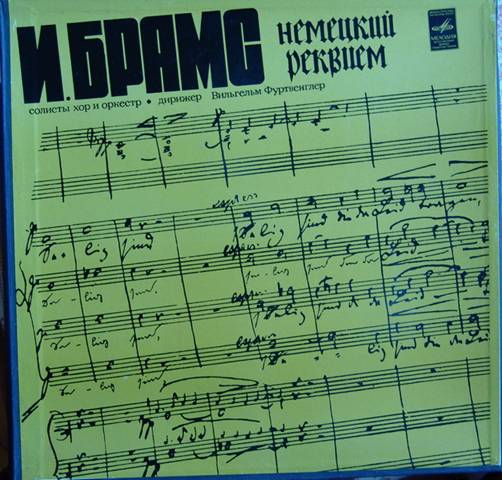
Fig. 20. Brahms. A German Requiem. Conductor Wilhelm Furtwangler.
4 December 1971. Common Room B-16. TOPAZ.
Bruckner — Symphonies Nos. 6 and 7 (cond. Jochum).
December 1971. Common Room B-16. TOPAZ. Cycle “New Stream”.
The Beatles — Let It Be, Abbey Road.
7 December 1971. Common Room B-16. TOPAZ + P. S. Aleksandrov.
Bach — St John Passion (cond. G. Ramin).
12 December 1971. Common Room B-16. TOPAZ. It was a Sunday. A grandiose concert took place: “All the symphonies of Anton Bruckner in one day” (Fig. 21 shows a photograph of the boxed set of recordings of Bruckner’s symphonies; Fig. 22 shows the monument to Bruckner). All his symphonies were played: 1, 2, 3, 4, 5, 6, 7, 8, 9. Conductor Jochum (Fig. 23 shows Jochum conducting Bruckner’s Ninth Symphony). We began at 10 o’clock in the morning. We finished at 23 hours 35 minutes. We put out large coloured candles (made by us). During the intervals there was coffee and biscuits. The average number of listeners was about 50. Practically all who came listened to the concert to the very end. There was a lot of emotion, although everyone was tired. Afterwards many stories circulated about this concert of ours (including the most incredible ones; we did not refute them but listened to them with pleasure).
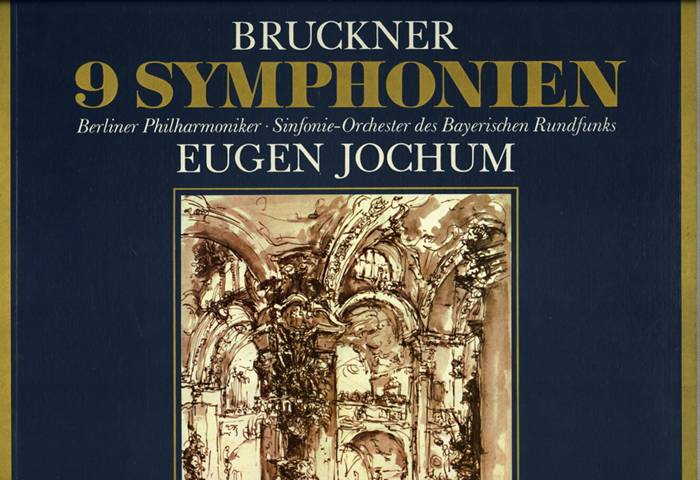
Fig. 21. The cover of the boxed set of gramophone records of all Bruckner’s symphonies. It was precisely these records that were played repeatedly at our musical evenings.

Fig. 22. The monument to Anton Bruckner.

Fig. 23. The conductor Jochum, under whose remarkable direction the Berlin Symphony Orchestra performed all nine symphonies of Bruckner.
24 December 1971 (Friday). Common Room B-16. TOPAZ + P. S. Aleksandrov.
Beethoven — Piano Sonata No. 14; Piano Concerto No. 1 (Geza Anda); Symphony No. 7 (cond. Karajan).
26 December 1971. Common Room B-16. TOPAZ.
Wagner — the opera “Tristan und Isolde” (cond. Furtwangler). Again there were candles. The concert passed with great elation. I spoke about Wagner, about Germanic and Scandinavian mythology; the text of the opera (in Russian translation) was projected onto the screen.
January 1972. Common Room B-16. TOPAZ.
Evening: “For the centenary of Scriabin”. Piano Concerto (Neuhaus, cond. Golovanov, Fig. 24); Symphonies Nos. 2 and 3 (cond. Golovanov); “Poem of Fire” (cond. Golovanov); Verdi — Requiem (cond. A. Toscanini, La Scala); Scriabin — “Poem of Ecstasy” (cond. Golovanov). The evening was very long, the hall was full, and almost nobody left.
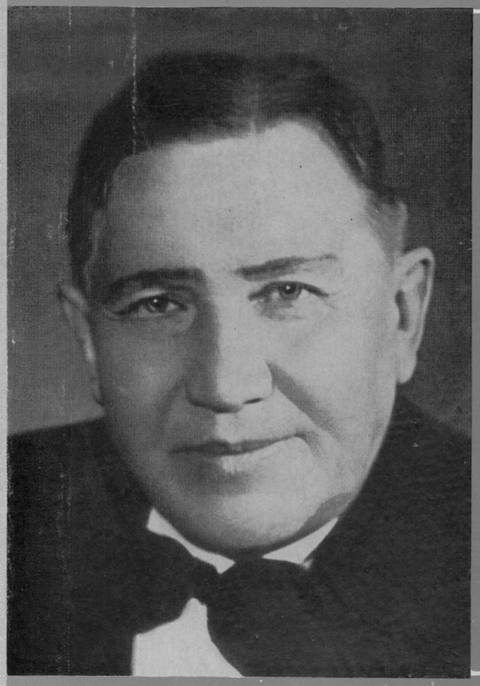
Fig. 24. The celebrated conductor N. S. Golovanov.
18 January 1972. Common Room B-16. TOPAZ + P. S. Aleksandrov.
Tchaikovsky — the opera “The Queen of Spades” (cond. Melik-Pashayev).
1 February 1972. Common Room B-16. TOPAZ. Cycle: “New Stream”.
Wagner — the Funeral March from the opera “Gotterdammerung” (cond. Solti); Bruckner — Symphonies Nos. 1 and 3 (cond. Jochum); Tchaikovsky — Symphony No. 6 (cond. Melik-Pashayev); Wagner — The Ride of the Valkyries (cond. Solti); the Beatles — Abbey Road. A very long but highly interesting evening. The hall was filled to capacity.
2 February 1972. Common Room B-16. TOPAZ.
Wagner — the Funeral March from “Gotterdammerung” (cond. Solti); Bruckner — Symphonies Nos. 2 and 3 (cond. Jochum).
3 February 1972. Common Room B-16. TOPAZ.
Wagner — the Funeral March from “Gotterdammerung” (cond. Solti); Bruckner — Symphonies Nos. 3, 4 and 5 (cond. Jochum).
4 February 1972. Common Room B-16. TOPAZ.
Wagner — the Funeral March from “Gotterdammerung” (cond. Solti); Bruckner — Symphonies Nos. 6 and 7 (cond. Jochum).
5 February 1972. Common Room B-16. TOPAZ.
Dvorak — Symphonies Nos. 8 and 9 (cond. V. Talich); the American Quartet.
8 February 1972. Common Room B-16. TOPAZ.
Wagner — the Funeral March from “Gotterdammerung” (cond. Solti); Bach — chorales (Notre-Dame organ); Bruckner — Symphony No. 8 (cond. Jochum), Symphony No. 9 (cond. Furtwangler).
22 February 1972. Common Room B-16. TOPAZ + P. S. Aleksandrov.
Schubert — Piano Trio in A minor; Symphony No. 8 (cond. Karajan); the “Trout” Quintet.
27 February 1972. Common Room B-16. TOPAZ.
Berlioz — Requiem (cond. Ch. Munch).
8 March 1972. Common Room B-16. TOPAZ. Cycle “New Stream”.
The Beatles — Let It Be, Abbey Road and some other Beatles record.
14 March 1972. Common Room B-16. TOPAZ + P. S. Aleksandrov.
Schubert — the song cycle “Winterreise” (baritone Walter).
21 March 1972. Common Room B-16. TOPAZ + P. S. Aleksandrov.
Schubert — Mass; Quartet.
28 March 1972. Common Room B-16. TOPAZ + P. S. Aleksandrov.
Bach — St Matthew Passion. Part one (cond. Klemperer).
4 April 1972. Common Room B-16. TOPAZ + P. S. Aleksandrov.
Bach — St Matthew Passion. Part two (cond. Klemperer).
7 April 1972. Common Room B-16. TOPAZ.
Bruckner — Mass No. 3; Symphonies Nos. 1 and 9 (cond. Jochum).
17 April 1972. Common Room B-16. TOPAZ + P. S. Aleksandrov.
Brahms — Symphony No. 4 (cond. Karajan); Tchaikovsky — Symphony No. 5 (cond. Karajan).
24 April 1972. Common Room B-16. TOPAZ.
Sibelius — Violin Concerto (Menuhin, cond. Boult); Brahms — Piano Concerto No. 2 (R. Serkin, cond. Szell); Sibelius — Violin Concerto (Guldenkampff, cond. Furtwangler); Dvorak — Symphony No. 9 “From the New World” (cond. Talich).
2 May 1972. Common Room B-16. TOPAZ.
Brahms — Piano Concerto No. 2 (Serkin, cond. Szell); Sibelius — Violin Concerto (Guldenkampff, cond. Furtwangler); Bruckner — Mass No. 3 in F minor (cond. Jochum).
9 May 1972. Common Room B-16. TOPAZ. Cycle “New Stream”.
Scriabin — Symphony No. 2 (cond. Golovanov); Carl Orff — Carmina Burana (cond. Smetacek); the Beatles — Let It Be.
11 May 1972. Common Room B-14. TOPAZ + G. V. Shilov.
Wagner — the opera “Die Meistersinger” (cond. R. Kempe).
16 May 1972. Common Room B-16. TOPAZ. Cycle “New Stream”.
Gershwin — Porgy and Bess (E. Fitzgerald, L. Armstrong, M. Davis — trumpet).
18 May 1972. Common Room B-14. TOPAZ + G. E. Shilov.
Debussy (Gieseking).
23 May 1972. Common Room B-16. TOPAZ.
Wagner — the opera “Das Rheingold” (cond. Solti).
3 June 1972. Common Room B-16. TOPAZ.
Wagner — a promotional record; the Beatles — Let It Be; Wagner — the scene of the fight with the dragon from the opera “Siegfried”.
5 June 1972. Common Room B-16. TOPAZ.
Wagner — the opera “Siegfried”, Acts 1 and 2 (cond. Solti).
6 June 1972. Common Room B-16. TOPAZ.
Wagner — the opera “Siegfried”, Act 3 (cond. Solti).
13 June 1972. Common Room B-16. TOPAZ.
Bruckner — Symphonies Nos. 3, 4 and 9 (cond. Jochum).
Season 10: academic year 1972–1973
15 October 1972. Common Room B-16. TOPAZ.
Mussorgsky — the opera “Boris Godunov” (cond. Golovanov).
22 October 1972. Common Room B-16. TOPAZ.
Bach — St Matthew Passion (cond. G. Swarowsky).
24 October 1972. Common Room B-16. TOPAZ + P. S. Aleksandrov.
Evening: “Sobinov and Nezhdanova”.
14 November 1972. Common Room B-16. TOPAZ + P. S. Aleksandrov.
Beethoven — Piano Sonatas 1, 7, 14, 17 (Geza Anda).
21 November 1972. Common Room B-16. TOPAZ + P. S. Aleksandrov.
Vivaldi, Corelli, Handel, Bach.
12 December 1972. Common Room B-16. TOPAZ + P. S. Aleksandrov.
Beethoven — Symphony No. 9 (cond. Furtwangler). A recording of 1950 from the Bayreuth Festival.
24 December 1972. Common Room B-16. TOPAZ.
Bach — St John Passion (cond. G. Ramin).
24 January 1973. Common Room B-16. TOPAZ.
Mahler (the programme has not survived).
25 January 1973. Common Room B-16. TOPAZ.
Bruckner — Symphony No. 1 (cond. Neumann), Symphonies Nos. 2 and 3 (cond. Jochum).
26 January 1973. Common Room B-16. TOPAZ.
Bruckner — Symphonies Nos. 4 and 5 (cond. Jochum).
27 January 1973. Common Room B-16. TOPAZ.
Bruckner — Symphonies Nos. 7 and 9 (cond. Jochum and Furtwangler).
29 January 1973. Common Room B-16. TOPAZ.
Bruckner — Symphonies Nos. 8 and 9 (cond. Jochum).
27 February 1973. Common Room B-16. TOPAZ.
Wagner — the opera “Tristan und Isolde” (cond. Furtwangler).
6 March 1973. Common Room B-16. TOPAZ.
Carl Orff — the cycle “Trionfi”: Carmina Burana, Catulli Carmina, The Triumph of Aphrodite (cond. Smetacek).
13 March 1973. Common Room B-16. TOPAZ + P. S. Aleksandrov.
Evening in memory of I. G. Petrovsky. Bach — St John Passion (cond. G. Ramin).
There was a scandal over my picture-announcement. I had depicted the Passion of Christ in a rather naturalistic manner. A certain woman lecturer from the faculty of journalism came to the evening, accusing us of propagating religious music. It was with difficulty that we calmed her down and saw her out. Fig. 25 shows a photograph of P. S. Aleksandrov and I. G. Petrovsky at a meeting of the Academic Council of Moscow State University.
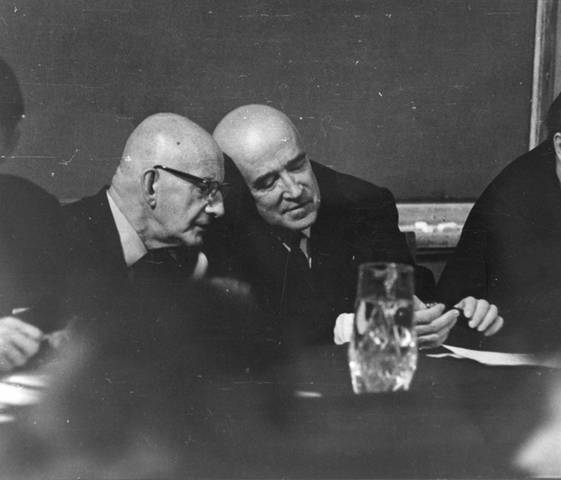
Fig. 25. Academicians P. S. Aleksandrov and I. G. Petrovsky at a meeting of the Academic Council of Moscow State University.
Holy Week: 16 April – 22 April 1973. We marked the tenth anniversary of the founding of the music club VEAF-TOPAZ. The very first concert of the Club, as recorded in the Chronicle of the Club, took place on 17 April 1963.
Sunday 15 April 1973. TOPAZ. We settle organizational questions of the forthcoming week-long “music session”. We drink tea and discuss a great deal.
Monday 16 April 1973. TOPAZ. We begin the concert at 18 o’clock. On the programme: Mozart — Requiem (cond. Krips); Beethoven — Symphonies 3, 5, 7 (cond. Furtwangler).
Tuesday 17 April 1973. TOPAZ + P. S. Aleksandrov. Beginning at 20 o’clock. Beethoven — Symphony No. 9 (cond. Furtwangler). A recording of 1953 at the Bayreuth Festival. (On the pages of the Chronicle of the Club there is here an entry that is no longer intelligible: “Zvonkin has resigned himself at last”).
Wednesday 18 April 1973. TOPAZ. Beginning at 19 o’clock. Mahler — Symphony No. 1 (cond. Walter); Tchaikovsky — Symphony No. 6 (cond. Melik-Pashayev); the Beatles — Let It Be, Abbey Road. We invited the teacher of English at the Faculty of Mechanics and Mathematics, E. A. Snesareva. She was interested to visit us and, in particular, to listen to the Beatles.
Symphony (cond. Walter); Tchaikovsky — Symphony No. 6 (cond. Melik-Pashayev); the Beatles — Let It Be, Abbey Road. We invited the teacher of English at the Faculty of Mechanics and Mathematics, E. A. Snesareva. She was interested to visit us and, in particular, to listen to the Beatles.
Thursday 19 April 1973. TOPAZ. Beginning at 20 o’clock. Bach — the Mass in B minor (cond. Karajan).
Friday 20 April 1973. Beginning at 6 p.m. Wagner — the opera “Tristan und Isolde” (cond. Furtwangler).
Friday 20 April 1973. Beginning at 18 o’clock. Wagner — the opera “Tristan und Isolde” (cond. Furtwangler).
We listened without an interval. It turned out very well. Many listeners. In general, with each day of this “music session” the number of visitors steadily increased.
Saturday 21 April 1973. Beginning at 18 o’clock. Bach — St Matthew Passion (cond. Klemperer).
St Matthew Passion (cond. Klemperer).
Sunday 22 April 1973. Beginning at 17 o’clock. Bruckner — Symphonies 6, 7, 8, 9 (cond. Jochum and Furtwangler).
On the pages of the Chronicle of the Club it is written here: “The name TOPAZ has disappeared” (in connection with the fact that several members of the Club had graduated from Moscow State University). Later, however, we decided to restore it and preserve it for the future.
21 May 1973. Common Room B-16. TOPAZ. Mahler — Symphony No. 2.
22 May 1973. Common Room B-16. TOPAZ. Wagner — the opera “Tannhauser”.
23 May 1973. Common Room B-16. TOPAZ. Wagner — “Das Rheingold”.
24 May 1973. Common Room B-16. TOPAZ. Wagner — “Die Walkure” (see Fig. 26).

Fig. 26. The box of the set of the cycle: Wagner, “The Ring of the Nibelung”.
25 May 1973. Common Room B-16. TOPAZ. Wagner — “Siegfried”.
26 May 1973. Common Room B-16. TOPAZ. Wagner — “Gotterdammerung”.
To these one must add another twenty evenings held by V. Pakhomov at the Kolmogorov boarding school. Their list, however, has not been preserved.
Further on there are large gaps in the Chronicle of the Club: from the second half of 1973 to the beginning of 1977 (that is, over more than three years!) the list of concerts has largely been lost, and in general, unfortunately, very few records have survived. After 1973 the membership of the Club working at Moscow State University changed completely, with the exception of its director A. T. Fomenko. The former members of Topaz, having left Moscow State University, for a while continued to meet — first at the home of Yuri Lezner (near Pushkinskaya Square), and later at the home of Alexander Zvonkin. But these were already “chamber” evenings — there were no students at them any longer. Let us return, however, to the evenings of the Topaz Club in the Main Building of Moscow State University. Here is what (very little) has survived concerning the years 1973–1976.
11th season: academic year 1973–1974
4 December 1973. TOPAZ. Bach — St Matthew Passion (cond. Klemperer).
8 December 1973. TOPAZ. Orff — Carmina Burana; Liszt — Requiem; Bruckner — Symphony No. 9.
Bruckner — Symphony No. 9.
11 December 1973. Bach — Chorales (organ of Notre-Dame, Pierre Cochereau); Strauss — “Thus Spoke Zarathustra”; Bruckner — Symphony No. 8.
Strauss — “Thus Spoke Zarathustra”; Bruckner — Symphony No. 8.
2 February 1974. TOPAZ + P. S. Aleksandrov. A conversation with students about music, and indeed about any subject at all.
25 February 1974. TOPAZ. Carl Orff — the cycle “Trionfi”.
4 March 1974. TOPAZ + P. S. Aleksandrov. Schubert — Symphony No. 8 (cond. Karajan).
Karajan).
8 March 1974. TOPAZ. Beethoven — Missa Solemnis, Symphony No. 9 (cond. Karajan).
(cond. Karajan).
11 March 1974. TOPAZ. Scriabin — Piano Concerto, Symphony No. 2; Bach — Chorales.
Symphony; Bach — Chorales.
25 March 1974. TOPAZ + P. S. Aleksandrov. Schumann — Carnaval (G. Anda); Tchaikovsky — “Manfred” (cond. Toscanini).
Tchaikovsky — “Manfred” (cond. Toscanini).
2 April 1974. TOPAZ + P. S. Aleksandrov. Mendelssohn — Trio in D minor (Rubinstein, Heifetz, Piatigorsky); Tchaikovsky — Quartet No. 2 in F major.
(Rubinstein, Heifetz, Piatigorsky); Tchaikovsky — Quartet No. 2 in F major.
9 April 1974. TOPAZ + P. S. Aleksandrov. Schumann — Piano Quintet, Quintet for cello and orchestra, Quintet for piano and orchestra.
quintet, quintet for cello and orchestra, quintet for piano and orchestra.
16 April 1974. TOPAZ + P. S. Aleksandrov. Vivaldi–Bach: concertos for violin and harpsichord (Oistrakh, Stern); Brahms — Symphony No. 4 (cond. Karajan).
for violin and harpsichord (Oistrakh, Stern); Brahms — Symphony No. 4 (cond. Karajan).
23 April 1974. TOPAZ + P. S. Aleksandrov. Tchaikovsky — Piano Concerto No. 2; Grieg — Piano Concerto; Rimsky-Korsakov — “Scheherazade”.
piano concerto; Grieg — Piano Concerto; Rimsky-Korsakov — “Scheherazade”.
29 April 1974. TOPAZ. Bach — “The Art of Fugue” (G. Gould); Bruckner — Symphonies Nos. 6 and 7 (cond. Jochum).
Symphonies Nos. 6 and 7 (cond. Jochum).
6 May 1974. TOPAZ + A. N. Kolmogorov. An evening of French vocal and instrumental music of the 17th–18th centuries: Corde, Charpentier, Couperin.
instrumental music of the 17th–18th centuries: Corde, Charpentier, Couperin.
Supplement: during the 1973–1974 season 26 evenings were held in the branches of the Topaz Club.
12th season: academic year 1974–1975
6 October 1974. TOPAZ. Cycle of evenings “New Stream”. The rock opera “Jesus Christ Superstar”.
“Jesus Christ Superstar”. Bach — St Matthew Passion (cond. Otto Klemperer, Fig. 27). Common Room B-16 was packed full. The listeners were standing in the aisles. The recording of the rock opera was brought and promoted by A. T. Fomenko. After the concert all the members of the initiative group signed the sumptuous booklet enclosed with the set of the “Passion”, Fig. 28. That memorable set with the signatures is kept by me to this day.

Fig. 27. The box of the set: Bach, St Matthew Passion. Conductor O. Klemperer.

Fig. 28. The signatures of the members of the initiative group of the TOPAZ club on the booklet enclosed with the set of the “Passion”. This was on 6 October 1974, after a remarkable concert.
15 October 1974. TOPAZ + P. S. Aleksandrov. Bach — Sonatas for solo violin (Menuhin, Malcolm), Passacaglia.
solo (Menuhin, Malcolm), Passacaglia.
22 October 1974. TOPAZ. Bruckner — Mass No. 3; A. L. Webber — the rock opera “Jesus Christ Superstar”.
The rock opera “Jesus Christ Superstar”.
29 October 1974. TOPAZ + P. S. Aleksandrov. Mozart — Requiem (cond. Krips).
cond. Krips).
12 November 1974. TOPAZ + P. S. Aleksandrov. Mozart — Sinfonia concertante for violin and viola (Oistrakh, Barshai); Tchaikovsky — Trio (the Menuhin Trio).
violin and viola (Oistrakh, Barshai); Tchaikovsky — Trio (the Menuhin Trio).
19 November 1974. TOPAZ. Poulenc — Concerto for organ and orchestra. Recordings of performances by Ravi Shankar and Yehudi Menuhin, and also Duke Ellington.
Recordings of performances by Ravi Shankar and Yehudi Menuhin, and also by Duke Ellington.
3 December 1974. TOPAZ + P. S. Aleksandrov. Mozart — Piano Concerto No. 3; Schumann; Beethoven.
concerto; Schumann; Beethoven.
10 December 1974. TOPAZ. Mahler — Symphony No. 9 (cond. Walter); Bruckner — Mass in F minor.
Bruckner — Mass in F minor.
January 1974. TOPAZ. The cycle “A New Stream”.
Jean-Michel Jarre — Oxygene (see Fig. 29), Zoolook, Magnetic Fields. The evening was conducted by A. T. Fomenko. At first some members of the Club actively objected to such contemporary music entering our Club. But I insisted, and afterwards passions subsided. Later we organized concerts of J.-M. Jarre repeatedly and always with great success.

Fig. 29. The cover of the disc “Jean-Michel Jarre. Oxygene”. In its time this work enjoyed great success among mechanics and mathematics students interested in music.
25 February 1975. TOPAZ. Bach — St Matthew Passion (cond. Klemperer).
4 March 1975. TOPAZ. Beethoven — Symphony No. 9 (cond. Furtwangler, Bayreuth Festival 1951, Fig. 30); Berlioz — Requiem (cond. Charles Munch). At this point the Chronicle of the Club contains an entry by a mechanics and mathematics student, Marat Zamaletdinov: “I appeared at this evening for the first time”.
Bayreuth Festival of 1951, Fig. 30); Berlioz — Requiem (cond. Ch. Munch). Here in the Chronicle of the Club there is an entry by the mechanics and mathematics student Marat Zamaletdinov: “I appeared for the first time at this evening”.

Fig. 30. The celebrated conductor Wilhelm Furtwangler. Recording at the Bayreuth Festival in 1951.
11 March 1975. TOPAZ + P. S. Aleksandrov. Tchaikovsky — the opera “Eugene Onegin”.
“Eugene Onegin”.
25 March 1975. TOPAZ + P. S. Aleksandrov. Beethoven — Piano Concerto No. 4 (G. Gould, cond. Bernstein), Symphony No. 3 (cond. Karajan).
piano concerto (G. Gould, cond. Bernstein), Symphony No. 3 (cond. Karajan).
1 April 1975. TOPAZ. Mozart, Vivaldi, Bach: violin concertos (Y. Menuhin); Pseudo-Nikisch; Bach; Mozart; Bruckner — Mass in F minor; D. Ellington — “The Golden Period”.
(Y. Menuhin); Pseudo-Nikisch; Bach; Mozart; Bruckner — Mass in F minor; D. Ellington — “The Golden Period”.
7 April 1975. TOPAZ + P. S. Aleksandrov. Bach — Passacaglia, Fantasia and Fugue in C minor; Brahms — Symphony No. 4 (cond. Karajan).
and Fugue in C minor; Brahms — Symphony No. 4 (cond. Karajan).
13th season: academic year 1975–1976
14 October 1975. TOPAZ. Bach, Mozart, Vivaldi — violin concertos (Y. Menuhin); Mozart and Haydn — Quartets Nos. 14 and 15; Orff — Catulli Carmina.
concertos (Y. Menuhin); Mozart and Haydn — Quartets Nos. 14 and 15; Orff — Catulli Carmina.
28 October 1975. TOPAZ + P. S. Aleksandrov. Tchaikovsky — the opera “The Queen of Spades”.
“The Queen of Spades”.
11 November 1975. TOPAZ. Bruckner — Symphonies Nos. 6 and 7 (cond. Jochum); Mozart — Requiem (cond. Karajan).
Mozart — Requiem (cond. Karajan).
2 December 1975. TOPAZ. Sibelius — Symphony No. 2; Bruckner — Mass No. 3, Symphony No. 9. Further on the Chronicle contains an entry by Marat Zamaletdinov: “At the beginning of 1976 Grisha Schwarz suggested that I collaborate in the Topaz club, and I agreed. Grisha and I prepared the evenings. Andrei Levkin drew the announcements. The equipment was a Vega-101… At the beginning of March I visited A. T. Fomenko's home for the first time. Enthusiasm increased. The concert planned for 24 February 1976 or 2 March 1976 did not take place, since during the 25th Congress (of the CPSU) all events were cancelled”. Further on the Chronicle of the Club says: “I, Marat Zamaletdinov, had the great honour of restoring and continuing the Chronicle of the glorious history of the Topaz club. The Chronicle came to me in the form in which it exists on pages 5–42. The description breaks off on p. 33, dated 1973; the list on p. 35 is also presumed to be from 1973 (the page numbering was done by me). On pp. 39–42 the year 1977 is described (written by Gr. Schwarz). I need to restore the period from 1973 to 1978 and to continue the description further. The restoration will be done from the lists found in the Chronicle in the form of separate sheets.”
Mass, Symphony No. 9. Further on the Chronicle contains an entry by Marat Zamaletdinov: “At the beginning of 1976 Grisha Schwarz suggested that I collaborate in the Topaz club, and I agreed. Grisha and I prepared the evenings. Andrei Levkin drew the announcements. The equipment was a Vega-101… At the beginning of March I visited the home of A. T. Fomenko for the first time. Enthusiasm increased. The concert planned for 24 February 1976 or 2 March 1976 did not take place, since during the 25th Congress (of the CPSU) all events were cancelled”. Further on the Chronicle of the Club it says: “I, Marat Zamaletdinov, had the great honour of restoring and continuing the Chronicle of the glorious history of the Topaz club. The Chronicle came to me in the form in which it exists on pages 5–42. The description breaks off on p. 33, dated 1973; the list on p. 35 is also presumed to be from 1973 (the page numbering was done by me). On pp. 39–42 the year 1977 is described (written by Gr. Schwarz). I need to restore the period from 1973 to 1978 and to continue the description further. The restoration will be carried out from the lists discovered in the Chronicle in the form of separate sheets”.
9 March 1976. Common Room B-16. TOPAZ + P. S. Aleksandrov. Schubert — Trio, the “Trout” Quintet.
Trio, the “Trout” Quintet.
16 March 1976. Common Room B-16. TOPAZ. Gluck — “Orpheus and Eurydice”; Strauss — “Thus Spoke Zarathustra” (cond. Strauss); Stravinsky — “Oedipus Rex” (cond. Ancerl).
Strauss — “Thus Spoke Zarathustra” (cond. Strauss); Stravinsky — “Oedipus Rex” (cond. Ancerl).
23 March 1976. Common Room B-16. TOPAZ. Carl Orff — “Trionfi”.
30 March 1976. Common Room B-16. TOPAZ + P. S. Aleksandrov. Brahms — Piano Concerto No. 2 (Gilels, cond. Jochum), Symphony No. 4 (cond. Karajan).
piano concerto (Gilels, cond. Jochum), Symphony No. 4 (cond. Karajan).
6 April 1976. Common Room B-16. TOPAZ + P. S. Aleksandrov. Brahms — Quintets and Quartets.
Quintets and quartets.
13 April 1976. Common Room B-16. TOPAZ. Bruckner — Symphonies Nos. 4 and 6.
symphonies.
20 April 1976. Common Room B-16. TOPAZ + P. S. Aleksandrov. Mozart — Piano Concertos Nos. 20 and 23. This evening was filmed by television for a film about Moscow State University. The film was intended for developing countries.
piano concertos Nos. 20 and 23. This evening was filmed by television for a film about Moscow State University. The film was intended for developing countries.
27 April 1976. Common Room B-16. TOPAZ. Bach — Mass in B minor (see Fig. 31) (cond. Karajan). Someone tore down our announcement, and Grisha Schwarz had to draw a new one.
(see Fig. 31) (cond. Karajan). Someone tore down our announcement, and Grisha Schwarz had to draw a new one.
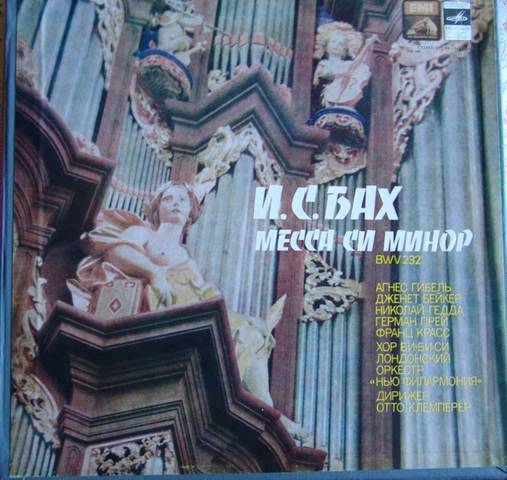
Fig. 31. Bach. Mass in B minor.
11 May 1976. Common Room B-16. TOPAZ. Bruckner — Symphonies Nos. 7 and 9 (cond. Jochum), Te Deum (cond. Walter).
(cond. Jochum), Te Deum (cond. Walter).
Supplement: during the 1975–1976 season 23 concerts were held in the branches of Topaz. But their list has been lost.
14th season: academic year 1976–1977
9 October 1976. Common Room B-16. TOPAZ. Beethoven — Symphony No. 9 (cond. Furtwangler, Bayreuth Festival 1951); R. Shankar — “Ragas”; I. Kalnins — Symphony No. 4.
(cond. Furtwangler, Bayreuth Festival 1951); R. Shankar — “Ragas”; I. Kalnins — Symphony No. 4.
26 October 1976. Common Room B-16. TOPAZ. Duke Ellington and Miles Davis (the programme has been lost).
Davis (the programme has been lost).
2 November 1976. Common Room B-16. TOPAZ. Vivaldi — Concerto for four violins; Bach — Concerto for violin and oboe; Mozart — Violin Concerto No. 3 (Y. Menuhin); Mahler — Symphony No. 1 (cond. Walter); Sibelius — Symphony No. 1 (cond. Ormandy).
violins; Bach — Concerto for violin and oboe; Mozart — Violin Concerto No. 3 (Y. Menuhin); Mahler — Symphony No. 1 (cond. Walter); Sibelius — Symphony No. 1 (cond. Ormandy).
16 November 1976. Common Room B-16. TOPAZ. Stravinsky — Oedipus Rex; Dvorak — Symphony No. 9 (cond. Talich); Mozart — Requiem (cond. Karajan).
Dvorak — Symphony No. 9 (cond. Talich); Mozart — Requiem (cond. Karajan).
23 November 1976. Common Room B-16. TOPAZ + P. S. Aleksandrov. Schubert — Symphony No. 8 (cond. Toscanini); Tchaikovsky — Trio.
Symphony No. 8 (cond. Toscanini); Tchaikovsky — Trio.
30 November 1976. Common Room B-16. TOPAZ. Bruckner — Mass in F minor (cond. Barenboim), Symphony No. 7 (cond. Jochum).
Barenboim), Symphony No. 7 (cond. Jochum).
7 December 1976. Common Room B-16. TOPAZ. Mahler — Symphony No. 3 (cond. Haitink), Symphony No. 7 (cond. Neumann).
Haitink), Symphony No. 7 (cond. Neumann).
14 December 1976. TOPAZ + P. S. Aleksandrov. Beethoven – Missa Solemnis (cond. Karajan).
M. Zamaletdinov writes: “During this period Yaroshevich and Lebedev began to appear at the meetings, and contact was established with them. Thus there were even more of us”.
In February 1977 there appears the entry: “This (that is, the further) period of the history has been described by G. Schwarz”. The initiative group of the “Topaz” Club for the period 1977–1978 was as follows: Fomenko, Anatoly Timofeevich (director of the Club). Department of Differential Geometry, room 13-23. Schwarz, Grigory (5th year). Department of Mathematical Logic (supervisor Dragalin). Lived at: B-1642 (right). Zamaletdinov, Marat (5th year). Department of Functional Analysis (supervisor Smolyanov). Lived at: B-1639 (left). Levkin, Andrei (5th year). Department of Mathematical Logic (supervisor Kudryavtsev). Lived at: B-1551.
22 February 1977. TOPAZ. Bach — Cantatas 18 and 21; Satie — “Parade” (fragment); Honegger — Pacific 231, “The March on the Bastille”; Poulenc — “Aubade”, Concerto for organ, strings and timpani; Messiaen — “Fete des belles eaux”.
(fragment); Honegger — Pacific 231, “The March on the Bastille”; Poulenc — “Aubade”, Concerto for organ, strings and timpani; Messiaen — “Fete des belles eaux”.
1 March 1977. TOPAZ. Carl Orff — “Trionfi”.
15 March 1977. TOPAZ + P. S. Aleksandrov. Schubert — Sonata No. 21 (Schnabel), Brahms — Symphony No. 3 (cond. Karajan).
(Schnabel), Brahms — Symphony No. 3 (cond. Karajan).
22 March 1977. TOPAZ. Sibelius — Violin Concerto: Furtwangler + Kulenkampff, Boult + Menuhin.
Kulenkampff, Boult + Menuhin.
28 March 1977. TOPAZ + P. S. Aleksandrov. Schubert — Symphony No. 3 (cond. Sawallisch); Haydn — Symphony No. 49.
(cond. Sawallisch); Haydn — Symphony No. 49.
5 April 1977. TOPAZ. Rachmaninoff — All-Night Vigil (on the poster it was cautiously described as: Concerto for unaccompanied choir, Op. 37). A large number of listeners gathered.
cautiously described as: Concerto for unaccompanied choir, Op. 37). A large number of listeners gathered.
12 April 1977. TOPAZ. Bach — St Matthew Passion (cond. Klemperer).
19 April 1977. TOPAZ. Bartok — Sonata for solo violin, Sonata for flute and percussion. The rock opera “Jesus Christ Superstar”. This recording was brought and actively promoted by A. T. Fomenko; this concert was another in the series “A New Stream”. The opera aroused great interest and was received by the listeners with enthusiasm. The chronicler writes: “This evening was conducted by A. T. Fomenko. New equipment appeared — the Elektronika B1-01. It thundered splendidly. A mass of people!”.
for flute and percussion. The rock opera “Jesus Christ Superstar”. This recording was brought and actively promoted by A. T. Fomenko; this concert was the next one in the series “A New Stream”. The opera aroused great interest and was received by the listeners with enthusiasm. The chronicler writes: “This evening was conducted by A. T. Fomenko. New equipment appeared — the Elektronika B1-01. It thundered splendidly. A mass of people!”.
26 April 1977. TOPAZ + P. S. Aleksandrov. Brahms — Symphony No. 4 (cond. Karajan); Tchaikovsky — Concerto No. 2. Here the chronicler G. Schwarz writes: “The activity of the Club is characterized by an upsurge. It has been decided to keep the name TOPAZ forever”. However, nothing is eternal. Further the chronicler adds: “The 14th season has ended. With the appearance of the ‘Elektronika’ optimism increased. But Levkin graduated from the Faculty of Mechanics and Mathematics, and we were left without an artist”.
(cond. Karajan); Tchaikovsky — Concerto No. 2. Here the chronicler G. Schwarz writes: “The activity of the Club is characterized by an upsurge. It has been decided to keep the name TOPAZ forever”. However, nothing is eternal. Further the chronicler adds: “The 14th season has ended. With the appearance of the ‘Elektronika’ optimism increased. But Levkin graduated from the Faculty of Mechanics and Mathematics, and we were left without an artist”.
Comment: during 1976–1978, in addition to those listed above, 35 TOPAZ concerts were held in the branches at the House of Students and at the Kolmogorov boarding school. But their list has been lost.
15th season: academic year 1977–1978
25 October 1977. TOPAZ. Mozart — Requiem (cond. Karajan); Bach — Chorales (organ of Notre-Dame, P. Cochereau); Dvorak — Stabat Mater (cond. Smetacek).
chorales (Notre-Dame organ, P. Cochereau); Dvorak — Stabat Mater (cond. Smetacek).
1 November 1977. TOPAZ + P. S. Aleksandrov. An evening devoted to the 60th anniversary of October. Beethoven — “Aurora”, “Appassionata” (Schnabel); Symphony No. 9 (recording from the Bayreuth Festival of 1951).
the 60th anniversary of October. Beethoven — “Aurora”, “Appassionata” (Schnabel); Symphony No. 9 (a recording from the Bayreuth Festival of 1951).
15 November 1977. TOPAZ. Violin concertos by Paganini and Bruch (Y. Menuhin); Haydn — the oratorio “The Creation” (cond. Koch). The “Topaz” tea parties in the mechanics and mathematics dormitory after concerts were resumed. The chronicler writes: “I won Mkhitaryan over to cooperation”.
(Y. Menuhin); Haydn — the oratorio “The Creation” (cond. Koch). The “Topaz” tea parties in the mechanics and mathematics dormitory after the concerts were resumed. The chronicler writes: “I won Mkhitaryan over to cooperation”.
22 November 1977. TOPAZ. Mozart — Symphony No. 39 (cond. K. Bohm); Bruckner — Mass in F minor (cond. Barenboim), Symphony No. 9 (cond. Jochum). The chronicler G. Schwarz writes: “The evening was conducted by A. T. Fomenko. E. Kotlyarsky, who works in radio, came with the aim of making a broadcast for the Yunost radio station. We found a new artist — Alfiya”. After this concert G. Schwarz met a mechanics and mathematics student, Alfiya, who drew beautifully. She was invited to the Club and since then has created wonderful picture-announcements.
Bruckner — Mass in F minor (cond. Barenboim), Symphony No. 9 (cond. Jochum). The chronicler G. Schwarz writes: “The evening was conducted by A. T. Fomenko. E. Kotlyarsky, who works for radio, came with the aim of making a programme for the Yunost radio station. We found a new artist — Alfiya”. After this concert a meeting took place between G. Schwarz and the mechanics and mathematics student Alfiya, who drew beautifully. She was invited to the Club and from then on created beautiful announcement-pictures.
29 November 1977. TOPAZ. Bach — Nos. 1–9 from “The Art of Fugue” (G. Gould at the organ); Berlioz — Symphonie fantastique (cond. Karajan); Bruckner — Symphony No. 4 (cond. Konwitschny). The chronicler G. Schwarz writes: “Alfiya drew a sexy announcement. We were afraid it would be taken down. It was not. A mass of people. She apologized. There will not be another”.
(G. Gould at the organ); Berlioz — Symphonie fantastique (cond. Karajan); Bruckner — Symphony No. 4 (cond. Konwitschny). The chronicler G. Schwarz writes: “Alfiya drew a sexy announcement. We were afraid it would be taken down. It was not. A mass of people. She apologized. There will not be another”.
13 December 1977. TOPAZ + P. S. Aleksandrov. Beethoven — Symphony No. 3, Triple Concerto for violin, cello and piano with orchestra (Oistrakh, Rostropovich, Richter, cond. Karajan). More than 70 people. WAGNER: “The Ring of the Nibelung” (with the text). This cycle of concerts was conducted by A. T. Fomenko.
the Triple Concerto for violin, cello and piano with orchestra (Oistrakh, Rostropovich, Richter, cond. Karajan). More than 70 people. WAGNER: “The Ring of the Nibelung” (with the text). This cycle of concerts was conducted by A. T. Fomenko.
6 December 1977. TOPAZ. Wagner — “Das Rheingold” (at the beginning there were 60 people, at the end 10).
people, at the end 10).
11 December 1977. TOPAZ. Wagner — “Die Walkure” (about 60 listeners, and moreover from the beginning to the end).
about 60 people, and moreover from the beginning to the end).
18 December 1977. TOPAZ. Wagner — “Siegfried” (50 people at the beginning, 33 at the end).
at the end 33).
20 December 1977. TOPAZ. Wagner — “Gotterdammerung” (40 people at the beginning, 20 at the end). The chronicler M. Zamaletdinov writes: “Enthusiasm is great, the plans are grandiose. In November A. T. Fomenko got married (see Fig. 32, Fig. 33). At first Schwarz and I were somewhat upset, but later it turned out to be in vain”.
people at the beginning, 20 at the end). The chronicler M. Zamaletdinov writes: “Enthusiasm is great, the plans are grandiose. In November A. T. Fomenko got married (see Fig. 32, Fig. 33). At first Schwarz and I were somewhat upset, but later it turned out to be in vain”.

Fig. 32. T. N. Fomenko and A. T. Fomenko on the day of their wedding (25 November 1977).
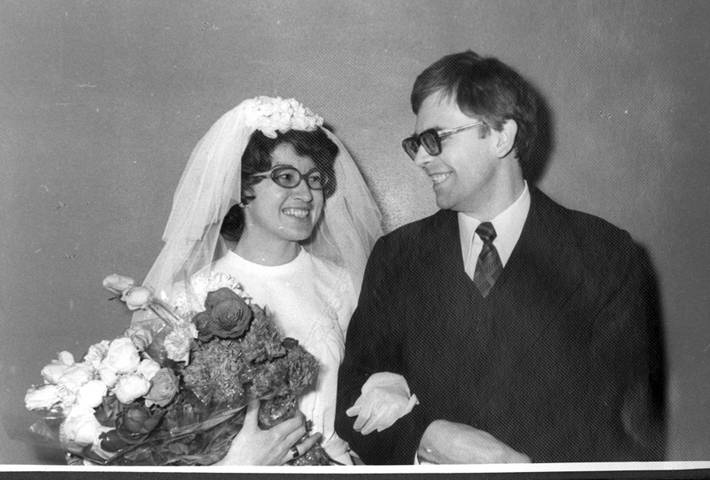
Fig. 33. T. N. Fomenko and A. T. Fomenko (25 November 1977).
G. Schwarz adds: “By the end of the year the directorate of the Club numbered seven members and six candidates — A. T. Fomenko, the main one, is in charge, then Schwarz, Zamaletdinov, Yaroshevich, Mkhitaryan, Alfiya (draws), Avetisyan”.
14 February 1978. TOPAZ + P. S. Aleksandrov. An evening devoted to the 300th anniversary of the birth of Vivaldi. Vivaldi — The Four Seasons; Vivaldi–Bach — transcriptions for organ (Pierre Cochereau, Notre-Dame de Paris). There were so many people that not all of those who wished could fit into Common Room B-16.
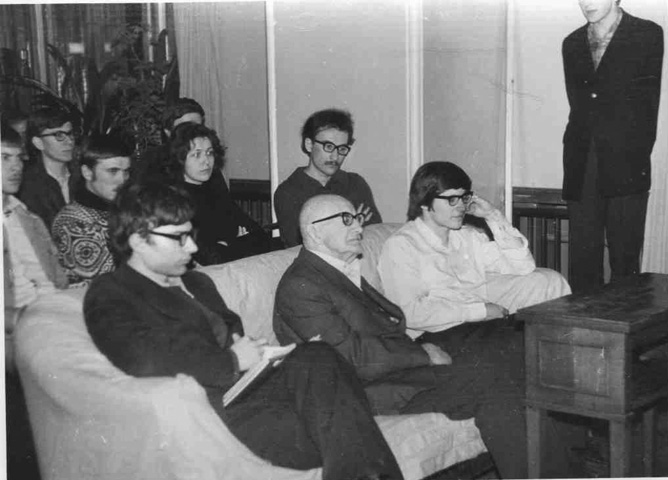
Fig. 33a. The concert of 14 February 1978. In the centre is Academician P. S. Aleksandrov. Next to him are members of the Topaz Club. On his right is Karen Mkhitaryan (a third-year mechanics and mathematics student), on his left is Marat Zamaletdinov (a mechanics and mathematics student, one of the chroniclers of the Topaz Club). In the second row, by the aisle, is Grisha Schwarz (a mechanics and mathematics student).
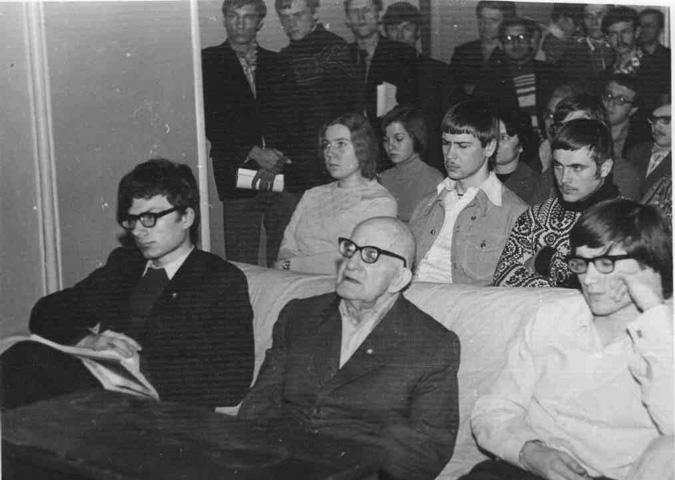
Fig. 33b. The concert of 14 February 1978. K. Mkhitaryan, P. S. Aleksandrov, M. Zamaletdinov.
21 February 1978. TOPAZ. Mahler — Symphony No. 4 (G. Swarowsky), Symphony No. 9 (K. Kondrashin). From the former membership of the Club, besides A. T. Fomenko, Yuri Lezner was also present.
symphony (K. Kondrashin). From the former membership of the Club, besides A. T. Fomenko, Yuri Lezner was also present.
28 February 1978. TOPAZ. Bruckner — Symphony No. 7 (cond. Furtwangler), Mahler — Symphony No. 7 (cond. L. Bernstein).
Mahler — Symphony No. 7 (cond. L. Bernstein).
7 March 1978. TOPAZ. Berg — “Wozzeck”.
14 March 1978. TOPAZ + P. S. Aleksandrov. Beethoven — Sonatas for violin and piano Nos. 4, 7 and 9; Bach — Partita No. 2 for solo violin (Menuhin); Bach — A Musical Offering; Strauss — Thus Spoke Zarathustra (cond. Strauss).
28 March 1978. TOPAZ. Penderecki — Strophes, Cantata, Song of Songs of King Solomon; Mozart — Requiem (cond. Koch); Bruckner — Symphony No. 3 (cond. Sanderling). The announcement did not indicate the programme but simply announced that there would be a musical evening. A great many people came. The programme was thought up half an hour before the beginning.
of Songs of King Solomon; Mozart — Requiem (cond. Koch); Bruckner — Symphony No. 3 (cond. Sanderling). The announcement did not indicate the programme but simply announced that there would be a musical evening. A great many people came. The programme was thought up half an hour before the beginning.
4 April 1978. TOPAZ. Stravinsky — Oedipus Rex; Kalnins — Symphony No. 4; Jean-Michel Jarre — Oxygene. The evening was conducted by A. T. Fomenko, and Enno Joon (from the former Topaz) was present. At this evening Fomenko brought into the Club's programme even more widely the works of Jean-Michel Jarre, a contemporary French composer who uses electronic means. His compositions are melodic and quite philosophical. (Comment by A. T. Fomenko: Fig. 34 shows one of the common rooms several hours before the beginning of one of our concerts (this is the spring of 1978). This time an exhibition of my drawings was also set up here. It was open for several days before the concert and several days after it.)
Symphony; Jean-Michel Jarre — Oxygene. The evening was conducted by A. T. Fomenko, and Enno Joon (from the former Topaz) was present. At this evening Fomenko brought into the Club's programme even more widely the works of Jean-Michel Jarre, a contemporary French composer who uses electronic means. His compositions are melodic and quite philosophical. (Comment by A. T. Fomenko: Fig. 34 shows one of the common rooms several hours before the beginning of one of our concerts (this is the spring of 1978). This time an exhibition of my drawings was also set up here. It was open for several days before the concert and several days after it.)
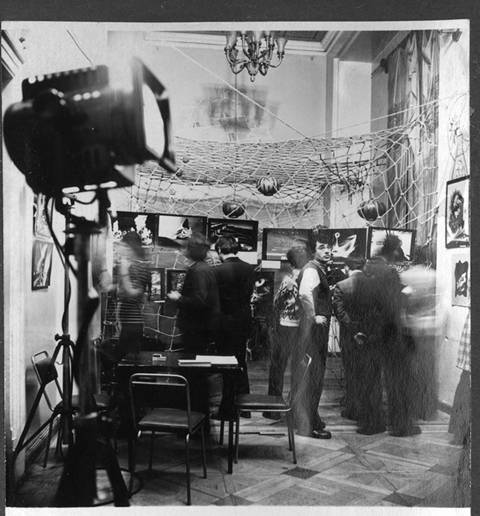
Fig. 34. A common room before the beginning of one of the concerts of the TOPAZ Club. Spring 1978. On this day (and for several days afterwards) an exhibition of graphic works by A. T. Fomenko was held here.
11 April 1978. TOPAZ. Bach — Christmas Oratorio.
18 April 1978. TOPAZ + P. S. Aleksandrov. Tchaikovsky — the poem “Hamlet”; Brahms — Violin Concerto (Menuhin).
“Hamlet”; Brahms — Violin Concerto (Menuhin).
25 April 1978. TOPAZ. The cycle “A New Stream”. Carl Orff — Carmina Burana; Pink Floyd — “The Dark Side of the Moon”; Jean-Michel Jarre — Oxygene. Here again the compositions of the Pink Floyd group were first introduced into the programmes of Topaz by A. T. Fomenko. There were very many listeners. M. Zamaletdinov writes: “This is how the 15th season ended. On 12 June 1978 the Yunost radio station broadcast a programme about the Topaz Club. Mkhitaryan got married and began to appear less often. The ‘Elektronika’ equipment began to work worse and does not always ‘produce enough sound power’”.
Burana; Pink Floyd — “The Dark Side of the Moon”; Jean-Michel Jarre — Oxygene. Here again the compositions of the Pink Floyd group were first introduced into the Topaz programmes by A. T. Fomenko. There were very many listeners. M. Zamaletdinov writes: “This ended the 15th season. On 12 June 1978 the radio station ‘Yunost’ told about the Topaz Club. Mkhitaryan got married and began to appear less often. The ‘Elektronika’ equipment began to work worse, it does not always ‘pull’ the sound power”.
16th season: academic year 1978–1979
The chronicler M. Zamaletdinov writes: “The new season began in a new setting. Schwarz withdrew from the work and only occasionally came to listen. But first-year students gradually appeared — Puchkov junior, Negashev, Shvetsov. Yaroshevich and Alfiya got married”.
19 September 1978. TOPAZ. Orff — Trionfo di Afrodite; Mahler — Symphony No. 5 (B. Walter). The chronicler adds, for some reason in surprise: “There were a lot of people, for some reason”.
symphony (B. Walter). The chronicler adds, for some reason in surprise: “There were a lot of people, for some reason”.
26 September 1978. TOPAZ. Bach — Suites (cond. Klemperer); Bruckner — Symphony No. 9 (cond. Klemperer).
Symphony No. 9 (cond. Klemperer).
3 October 1978. TOPAZ. Vivaldi — Concerto for four violins; Bach — Concerto for violin and oboe; Mozart — Violin Concerto No. 9 (Y. Menuhin); Beethoven — Symphony No. 9 (cond. Furtwangler, Bayreuth Festival 1951).
concerto for violin and oboe; Mozart — Violin Concerto No. 9 (Y. Menuhin); Beethoven — Symphony No. 9 (cond. Furtwangler, Bayreuth Festival 1951).
10 October 1978. TOPAZ + Yu. M. Smirnov. Vivaldi — Concerto for two violins, Gloria, Stabat Mater. Thereby our Club restored contact with Professor Yu. M. Smirnov.
violins, Gloria, Stabat Mater. Thereby our Club restored contact with Professor Yu. M. Smirnov.
17 October 1978. TOPAZ. Bach — Mass in B minor (cond. Karajan).
24 October 1978. TOPAZ. Evening: “Music of the 20th century”. Bartok — Music for Strings, Percussion and Celesta (cond. Mravinsky); Carl Orff — Catulli Carmina (cond. Smetacek); Ravi Shankar — “Ragas”; Pink Floyd — Animals. M. Zamaletdinov writes: “A great success. Strange as it may seem, the high point of the programme turned out to be R. Shankar”.
for strings, percussion and celesta (cond. Mravinsky); Carl Orff — Catulli Carmina (cond. Smetacek); Ravi Shankar — “Ragas”; Pink Floyd — Animals. M. Zamaletdinov writes: “A great success. Strange as it may seem, the high point of the programme turned out to be R. Shankar”.
31 October 1978. TOPAZ + Yu. M. Smirnov. Purcell — Dido and Aeneas, Music for the Funeral of Queen Mary.
Music for the Funeral of Queen Mary.
14 November 1978. TOPAZ. Franck — Chorales, Symphony (cond. Ormandy); Sibelius — The Bard, Symphony No. 2 (cond. Garaguly).
Sibelius — The Sagas, Symphony No. 2 (cond. Garaguly).
21 November 1978. TOPAZ + Yu. M. Smirnov. Handel — Suites in G minor No. 7 and in D minor No. 8, sonatas for violin and harpsichord, trio sonatas, choruses from the oratorio “Judas Maccabaeus”, organ concertos, concerto for viola and orchestra. The chronicler writes: “We began on new equipment, more precisely a new record player and amplifier”.
No. 7, in D minor No. 8, sonatas for violin and harpsichord, trio sonatas, choruses from the oratorio “Judas Maccabaeus”, organ concertos, concerto for viola and orchestra. The chronicler writes: “We began on new equipment, more precisely a new record player and amplifier”.
20 February 1979. TOPAZ. Berlioz — Symphonie fantastique; Requiem (cond. Charles Munch).
(cond. Ch. Munch).
27 February 1979. TOPAZ + P. S. Aleksandrov. Beethoven — Piano Sonatas Nos. 1, 3, 5, 7 and 8 (Badura-Skoda).
piano: 1, 3, 5, 7, 8 (Badura-Skoda).
6 March 1979. TOPAZ. An evening of early music (the programme has been lost).
13 March 1979. TOPAZ. Mahler — Symphony No. 1 (cond. Walter), Symphony No. 7 (cond. Neumann).
symphony (cond. Neumann).
20 March 1979. TOPAZ. Music of the 20th century. Schoenberg — Verklarte Nacht; Berg; Webern; Stravinsky — Violin Concerto; Messiaen.
night; Berg; Webern; Stravinsky — Violin Concerto; Messiaen.
27 March 1979. TOPAZ. Mozart — Violin Concertos Nos. 5 and 7 (Menuhin); Beethoven — Quartets Nos. 4 and 6 (Gewandhaus).
No. 5, 7 (Menuhin); Beethoven — Quartets Nos. 4, 6 (Gewandhaus).
3 April 1979. TOPAZ + Yu. M. Smirnov. W. F. Bach and J. C. Bach.
10 April 1979. TOPAZ + Yu. M. Smirnov. J. S. Bach — Motet, Passacaglia, sonata, concerto for violin, piano and celesta.
sonata, concerto for violin, piano and celesta.
17 April 1979. TOPAZ + P. S. Aleksandrov. Beethoven — Piano Sonatas Nos. 12, 17, 21 and 26 (Badura-Skoda).
piano Nos. 12, 17, 21, 26 (Badura-Skoda).
17th season: end of the academic year 1979
M. Zamaletdinov writes: “We did not begin for a long time. At last I obtained 35AS loudspeakers. At present Topaz has the best equipment in its whole history. This is a record player Elektronika B1-011, an amplifier Radiotekhnika UKU-020, loudspeakers 35AS-1”.
20 November 1979. TOPAZ. Mozart — Symphony No. 38 “Prague”; Bach — Chorales (P. Cochereau, organ of Notre-Dame de Paris); Mozart — Requiem (cond. Karajan).
Chorales (P. Cochereau, organ of Notre-Dame de Paris); Mozart — Requiem (cond. Karajan).
27 November 1979. TOPAZ + P. S. Aleksandrov. Schubert (the programme has been lost).
has been lost).
4 December 1979. TOPAZ. Bach — organ works (Gedike); Verdi — Requiem (cond. Toscanini). The evening was conducted by A. T. Fomenko. The Topaz tradition of beginning almost every evening with Pacific 231 was revived. A change in the membership of the Topaz Club. In particular, Marat Zamaletdinov completed his postgraduate studies and left Moscow State University. In the autumn of 1979 and the spring of 1980 there were no concerts.
— Requiem (cond. Toscanini). The evening was conducted by A. T. Fomenko. The Topaz tradition of beginning almost every evening with Pacific 231 was revived.
A change in the membership of the Topaz Club. In particular, Marat Zamaletdinov completed his postgraduate studies and left Moscow State University. In the autumn of 1979 and in the spring of 1980 there were no concerts.
18th season: academic year 1980–1981
A new chronicler of the Club appears: Elena Kiselkova (group 305). A new initiative group is formed. Here is its list according to E. Kiselkova. She writes: “There were no meetings of the Topaz Club for a long time, about 10 months. A change of the Club's (active) membership took place. So, the curtain rises and the following performers appear before our eyes: 1. Prof. Anatoly Timofeevich Fomenko — director and chief producer. 2. Kiselkova, Elena (group 305) — chronicler, and likewise accompanist and artist. 3. Elena Ganzha — stage director, and likewise accompanist and head of the drapery department (B-1842). 4. Akylbekova, Ermesha — stage director, and likewise head of the literary department (B-1842). 5. Zheligovsky, Vladislav — stage director, and likewise sound engineer and accompanist. 6. Gorokhov, Andrei (group 301) — artist. 7. Chief stage hands: Balashov, Alexei; Izyumin, Oleg; and Zuikov, Sergei”. Further the chronicler Kiselkova reports:
October 1980. Common Room B-16. TOPAZ. The evening was conducted by A. T. Fomenko. — Bruckner and Jean-Michel Jarre (the programme has not been preserved).
“The meeting went splendidly. The common room was overflowing. This was my first visit to Topaz”.
October 1980. Common Room B-16. TOPAZ (V. Zh.). Bach (the programme has not been preserved). About 25 people were present.
9 October 1980. Common Room B-16. TOPAZ (E. G. + E. A.). Early Italian music. Corelli, Geminiani, Vivaldi (concerto for organ and strings). There were few people, about 10, since the announcement was put up late. Perhaps we shall repeat this programme.
Italian music. Corelli, Geminiani, Vivaldi (concerto for organ and strings). There were few people, about 10, since the announcement was put up late. Perhaps we shall repeat this programme.
November 1980. Common Room B-12. TOPAZ (E. T. + E. A. + V. Zh.). Early Italian music. Corelli — Trio Sonata; Geminiani; Pergolesi — Concertino No. 4; Scarlatti; Vivaldi — Concerto for organ and strings; Tartini; Boccherini — Concerto for cello and orchestra, Concerto for guitar and orchestra. Semi-darkness, a table lamp, knights on the walls. There were about 40 people.
Italian music. Corelli — Trio Sonata; Geminiani; Pergolesi — Concertino No. 4; Scarlatti; Vivaldi — Concerto for organ and strings; Tartini; Boccherini — Concerto for cello and orchestra, Concerto for guitar and orchestra. Semi-darkness, a table lamp, knights on the walls. There were about 40 people.
December 1980. Common Room B-16. TOPAZ (V. Zh.). Handel — Judas Maccabaeus, Music for the Royal Fireworks, Suite No. 7, Sonata for piano, Suite for organ and orchestra, Concerto for guitar and orchestra, three sonatas for flute and basso continuo. “The music is marvellous. That evening the Topaz people accepted me into their collective” (E. Kiselkova).
Music for the Royal Fireworks, Suite No. 7, Sonata for piano, Suite for organ and orchestra, concerto for guitar and orchestra, three sonatas for flute and basso continuo. “The music is marvellous. That evening the Topaz people accepted me into their collective” (E. Kiselkova).
3 March 1981. Common Room B-16. TOPAZ (E. T.). Rachmaninoff — All-Night Vigil (sung by Bulgarians), The Bells (cond. E. Svetlanov). “Now we have our own artist. Andrei drew a very interesting announcement for this evening: a head with huge eyes, breaking through a horizontal plane from below; it protrudes through the opening that has formed, and around it piles of broken bricks are heaped up — keys. So to speak, the birth of the keys. The left eye is damaged in such a way that the nerve plexus is exposed. And a tiny grand piano stands on one of the fragments. The announcement had to be hung up at the faculty, since, quite inopportunely, the former place had been varnished and hanging things there was forbidden. But here a terrible fate awaited it: the announcement existed and gladdened the eye only until the evening, and then disappeared without trace”. WAGNER. The tetralogy “The Ring of the Nibelung”. A cycle of evenings. Conducted by A. T. Fomenko. The text of the operas is projected on to a screen. “For a whole week our small collective searched for a filmoscope. It turns out that this is an extraordinarily difficult business. In particular, if one confines oneself to the University alone, it is simply impossible. But in the end Fortune smiled on us after all”.
All-Night Vigil (sung by Bulgarians), The Bells (cond. E. Svetlanov). “Now we have our own artist. Andrei drew a very interesting announcement for this evening: a head with huge eyes, breaking through a horizontal plane from below; it protrudes through the opening that has formed, and around it piles of broken bricks are heaped up — the keys. So to speak, the birth of the keys. The left eye is damaged in such a way that the nerve plexus is exposed. And a tiny grand piano stands on one of the fragments. The announcement had to be hung up in the faculty, since quite inopportunely the former place had been varnished and hanging things there was forbidden. But here a terrible fate awaited it: the announcement existed and gladdened the eye only until the evening, and then disappeared without trace”.
WAGNER. The tetralogy “The Ring of the Nibelung”. A cycle of evenings. Conducted by A. T. Fomenko. The text of the operas is projected on to a screen. “For a whole week our whole small collective searched for a filmoscope. It turns out that this is an extraordinarily difficult business. In particular, if one confines oneself to the University alone, it is simply impossible. But in the end Fortune smiled on us all the same”.
9 March 1981. Common Room B-16. TOPAZ (A. T. Fomenko). Wagner — Das Rheingold (there were about 60 people).
Das Rheingold (there were about 60 people).
11 March 1981. Common Room B-16. TOPAZ (A. T. Fomenko). Wagner — Die Walkure (it was splendid! there were about 50 people).
Die Walkure (it was splendid! there were about 50 people).
16 March 1981. Common Room B-16. TOPAZ (A. T. Fomenko). Wagner — Siegfried (there were many people, the finale came at midnight!).
Siegfried (there were many people, the finale came at midnight!).
18 March 1981. Common Room B-16. TOPAZ (A. T. Fomenko). Wagner — Gotterdammerung. Cond. W. Furtwangler. “With the announcement there is a story again. Andrei drew it in large format, depicted a winged goddess (in the upper part) with an axe… and from below upwards black hands are directed, trying to seize her. All this in white-red-black tones… And we lost the announcement already in the second half of the day. Suddenly it became sad, everyone rushed to search, but our attempts were in vain. ‘Die Walkure’ passed with great success. For ‘Siegfried’ and ‘Gotterdammerung’ a new announcement had to be drawn. This time we wrote the following: ‘Dear friends! We appeal to you with a great request: do not take down the announcements of TOPAZ’. They did not stop taking them down, but they began to do it much more rarely. The most dramatic moment in the whole cycle of evenings was ‘Gotterdammerung’: 1) The projector broke down (true, it was nevertheless repaired), as a result of which we finished only at 0.30 a.m., after midnight. 2) The film was torn (the translation of the opera, strange as it may seem, did not suffer). 3) And in conclusion — a small scandal with the administration (because the concert ended too late)” (E. Kiselkova).
of the Gods. Cond. W. Furtwangler. “With the announcement there is a story again. Andrei drew it in large format, depicted a winged goddess (in the upper part) with an axe… and from below upwards black hands are directed, trying to seize her. All this in white-red-black tones… And we lost the announcement already in the second half of the day. Suddenly it became sad, everyone rushed to search, but our attempts were in vain. ‘Die Walkure’ passed with great success. For ‘Siegfried’ and ‘Gotterdammerung’ a new announcement had to be drawn. This time we wrote the following: ‘Dear friends! We appeal to you with a huge request: do not take down the announcements of TOPAZ’. They did not stop taking them down, but they began to do it much more rarely. The most dramatic moment in the whole cycle of evenings was ‘Gotterdammerung’: 1) The projector broke down (true, it was nevertheless repaired), as a result of which we finished only at 0.30, after midnight. 2) The film was torn (the translation of the opera, strange as it may seem, did not suffer). 3) And in conclusion — a small scandal with the administration (because the concert ended too late)” (E. Kiselkova).
31 March 1981. Common Room B-16. TOPAZ.
“The Quartet of the Union of Composers of the USSR came to visit us. For the first time in the history of TOPAZ a meeting takes place without ‘disc music’. The members of the quartet: Sergei Ryabov — first violin, Galina Pushkina — second violin, Mikhail Gurfinkel — viola, Kira Tsvetkova — cello, laureates of international and all-Union competitions. On the programme: S. Ya. Myaskovsky (for the centenary of his birth) — Quartet No. 13; S. S. Prokofiev (for the 90th anniversary of his birth) – Quartet No. 2. The evening was conducted by S. Ryabov. At first there were very few listeners, but soon the common room was filled”.
7 April 1981. Common Room B-16. TOPAZ. Schubert — the Unfinished Symphony, Fantasy in F minor, organ works, songs, the “Trout” Quintet. About 15 listeners in the hall.
symphony, Fantasy in F minor, organ works, songs, the “Trout” Quintet. About 15 listeners in the hall.
15 April 1981. Common Room B-17. TOPAZ. An evening devoted to the 111th anniversary of the birth of V. I. Lenin. Beethoven — Appassionata (Schnabel), Symphony No. 9 (cond. W. Furtwangler, recording at the Bayreuth Festival). “The evening went splendidly. This was helped by: the very cosy common room; the extraordinarily powerful music in its expression and sound. The evening lasted only a little more than two hours (so far the shortest of the whole season; there were about 20 people)”.
anniversary of the birth of V. I. Lenin. Beethoven — Appassionata (Schnabel), Symphony No. 9 (cond. W. Furtwangler, recording at the Bayreuth Festival). “The evening went splendidly. This was helped by: the very cosy common room; the extraordinarily powerful music in its expression and sound. The evening lasted only a little more than two hours (so far the shortest of the whole season; there were about 20 people)”.
21 April 1981. Common Room B-16. TOPAZ + Yu. M. Smirnov. Haydn — Piano Sonatas Nos. 2 and 32, Quartets Op. 3 (28) and 35, Symphonies Nos. 26 and 45 (Farewell), Divertimento for string orchestra, Salve Regina.
piano Nos. 2, 32, Quartets Op. 3 (28) and 35, Symphonies Nos. 26 and 45 (Farewell), Divertimento for string orchestra, Salve Regina.
5 May 1981. Common Room B-16. TOPAZ + Yu. M. Smirnov. Mahler — Kindertotenlieder.
children.
12 May 1981. Common Room B-16. TOPAZ. Berlioz (the programme has not been preserved).
preserved).
19th season: autumn–winter 1981
Membership of the initiative group of TOPAZ: 1. A. T. Fomenko (director), 2. Svetlichnova, Irina (group 510, B-1830 left), 3. Kiselkova, Elena (group 405), 4. Gorokhov, Andrei (group 401), 5. Zheligovsky, Vladislav (former group 503, Institute of Physics of the Earth), 6. Tyuleneva, Svetlana (former group 503, Institute of Physics of the Earth), 7. Boltova, Tatiana (group 101, FDS).
29 September 1981. Common Room B-17. TOPAZ (Zh. V.). Gustav Mahler — Symphony No. 7 (cond. Vaclav Neumann). There were 15 people,
symphony (cond. Vaclav Neumann). There were 15 people,
13 October 1981. Common Room B-17. TOPAZ (E. K.). Robert Schumann — Kreisleriana (piano V. Horowitz), Fantasy Pieces, Op. 73 (cello D. Shafran, piano F. Gottlieb), romances: Mondnacht, The Lotus Flower, Stille Liebe, Stille Tranen, My Rose (E. Obraztsova, piano Vazha Chachava), Symphonic Etudes (piano D. Alexeev), Symphony No. 4, Op. 120. There were 17 people.
Kreisleriana (piano V. Horowitz), Fantasy Pieces, Op. 73 (cello D. Shafran, piano F. Gottlieb), romances: Mondnacht, The Lotus Flower, Stille Liebe, Stille Tranen, My Rose (E. Obraztsova, piano Vazha Chachava), Symphonic Etudes (piano D. Alexeev), Symphony No. 4, Op. 120. There were 17 people.
20 October 1981. Common Room B-17. TOPAZ (I. S.). Instrumental music of old Italian composers.
music of old Italian composers.
27 October 1981. Common Room B-14. TOPAZ. The evening was conducted by A. T. Fomenko.
J. S. Bach — St Matthew Passion, first part (cond. Otto Klemperer). “Quite unexpectedly for us our Common Room B-17 was occupied by Polish students, and we were forced to move to B-14. It turned out to be free. in particular, of furniture as well. Chairs were brought, a table was obtained, the girls worked hard, and as a result the common room began to look cosy”.
29 October 1981. Common Room B-16. TOPAZ. The evening was conducted by A. T. Fomenko.
J. S. Bach — St Matthew Passion, second part (cond. Otto Klemperer). “At the end of the evening there were 21 listeners (16 boys and 5 girls). A very great trouble with the announcements: they are taken down all the time. Our artists work creatively, reveal their skill (someone, probably, already has a large collection of their works). Perhaps they should be glued to the stand for good?” (E. Kiselkova).
3 November 1981. Common Room B-17. TOPAZ (Slava Chistyakov, 4th year student of the Faculty of Mechanics and Mathematics). The Beatles — Revolver, Sgt. Pepper’s Lonely Hearts Club Band, etc. “Our Common Room is a huge ‘rubber’ one. It filled up to overflowing. It seemed that there would be no room for the equipment. After the end we were attacked and bombarded with wishes, questions… It must be admitted that this evening considerably increased the popularity of the Club”.
Faculty of Mechanics and Mathematics). The Beatles — Revolver, Sgt. Pepper’s Lonely Hearts Club Band, etc. “Our Common Room is a huge ‘rubber’ one. It filled up to overflowing. It seemed that there would be no room for the equipment. After the end we were attacked and bombarded with wishes, questions… It must be admitted that this evening considerably increased the popularity of the Club”.
10 November 1981. Common Room B-17. TOPAZ (V. Zh.). Mozart — Requiem; Bach — organ works (in accordance with the wishes of the public). “There were 32 people. The mystery of the announcements was solved. Before the beginning one of the members of the Club (I. S.) happened to be in the lift together with two girls (they turned out to be the abductors). They clearly lacked caution and conspiratorial skill. Not noticing anything or anyone, they carried on a lively conversation. One reported the removal of the last announcement (that is, Bach…), and the other, in her turn, revealed that she was the owner of the previous ones”.
— organ works (in accordance with the wishes of the public). “There were 32 people. The mystery of the announcements was solved. Before the beginning one of the members of the Club (I. S.) accidentally found himself in the lift together with two girls (they turned out to be the thieves). They clearly lacked caution and secrecy. Not noticing anything or anyone, they carried on a lively conversation. One reported the removal of the last announcement (that is, Bach…), and the other, in her turn, revealed that she was the owner of the previous ones”.
17 November 1981. Common Room B-17. TOPAZ. The evening was conducted by A. T. Fomenko. Jean-Michel Jarre.
Michel Jarre. There were 50 people. Great difficulties with the equipment.
24 December 1981. Common Room B-17. TOPAZ (I. S.). Paganini.
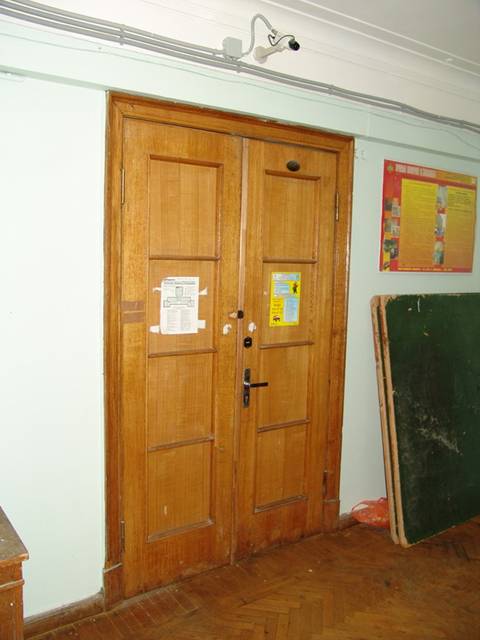
Fig. 35. The door of Common Room B-16 of the Moscow State University dormitory in zone B. Many concerts of the “TOPAZ” club took place here. At present the common room is closed. Photograph of 2009.
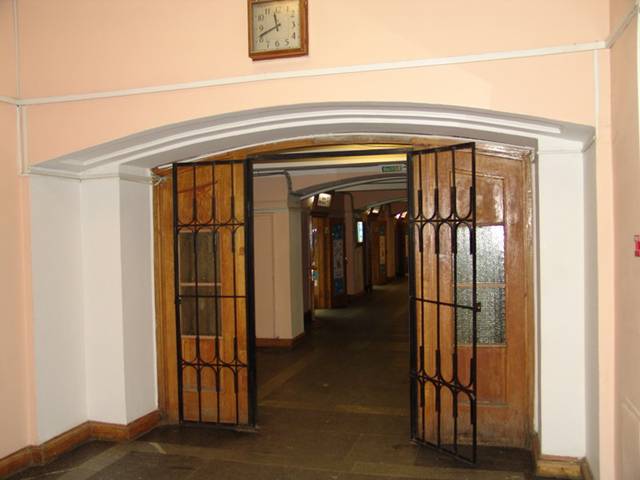
Fig. 36. The passage from the central zone A to zone B of the Main Building of Moscow State University. It was precisely here that for many years the large picture-announcements about the concerts of the “TOPAZ” club were hung.
Here the Chronicle of the TOPAZ Club breaks off. The regular concerts came to an end. Thus the VEAF-TOPAZ Club worked in the dormitories and branches of the Faculty of Mechanics and Mathematics of Moscow State University from the beginning of 1963 to the end of 1981, that is, for about twenty years. That is a great deal.
But the history of the “Topaz” club did not end there, fortunately. The club continued its work. The further activity of the music club “Topaz” is connected with the names of A. O. Ivanov and A. A. Tuzhilin (now well-known professors of the Department of Differential Geometry and its Applications of the Faculty of Mechanics and Mathematics of Moscow State University). The following fragment of the chronicle was written by A. O. Ivanov (November 2009).
Beginning in 1984, being then fourth-year students, we took up the initiative of the previous organizing committee of the “Topaz” club. From 1981 to 1984, as far as we remember, “Topaz” was run by the mechanics and mathematics postgraduate student Elena Kiselkova. At the same time, A. T. Fomenko remained the permanent director of the “Topaz” club. Active participants also included students of our department Mikhail Pontaev, Elena Sannikova (Ardashirova) and Inga Shklyanko (Ptitsyna). The musical evenings were still held in the common rooms of zone “B”: in B-14 and B-16. The club met about twice a month. The number of listeners fluctuated from 10 to 40 people. The “Topaz” club shared its musical equipment with the famous discotheque of the Faculty of Chemistry, “U predela”. The venue of that discotheque (unlike the “Topaz” club) migrated through the dormitories of Moscow State University because repairs in the Moscow State University House of Culture had already begun then. The programme of our club included both classical music and rock music. Of the classics, rare vocal recordings were popular. In particular, operas by C. W. Gluck were performed. To these evenings we invited the professor of the Faculty of Mechanics and Mathematics Yu. M. Smirnov. He had a huge collection of records (in his university flat the records occupied two enormous cupboards), he loved Gluck very much, especially “Orpheus and Eurydice”, and spoke with enthusiasm about opera and about Gluck. Yu. M. Smirnov was a frequent guest of the “Topaz” club. In addition, we invited Academician A. N. Kolmogorov. With his help we organized an evening of Gluck at which Kolmogorov's favourite opera “Alceste” was played. Andrei Nikolaevich was already feeling unwell; he was accompanied by his pupil at that time, Sasha Bulinsky, now the well-known professor of the Department of Probability Theory A. V. Bulinsky. Nevertheless, Andrei Nikolaevich kindly agreed to come and spoke about Gluck and his operas. His vivid account was remembered by the listeners for ever. Also very popular, as always in the history of the “Topaz” club, were the famous Passions of J. S. Bach. In particular, the St Matthew Passion and the St John Passion were played. We note that the remaining two oratorios (the St Luke Passion and the St Mark Passion) were for some reason less accessible in the USSR. Piano music was also played: Beethoven, Chopin, Schumann. Of contemporary music, the famous rock opera “Jesus Christ Superstar” by A. L. Webber was often performed, as were some albums of the Pink Floyd group, such as The Wall, The Dark Side of the Moon, Animals and others. Evenings devoted to the work of Jean-Michel Jarre were also popular; his albums Oxygene, Equinoxe and Magnetic Fields were played at them. These rare records belonged to A. T. Fomenko, who conducted the concerts himself and always spoke interestingly about contemporary music. A. Ivanov and A. Tuzhilin organized the evenings of the “Topaz” club until 1988. In 1988 we handed over the running of the club to Inga Shklyanko (Ptitsyna). Unfortunately, turbulent events connected with perestroika were beginning in the country. In this connection the chronicle of the “Topaz” club breaks off here. As has already been said above, the activity of the club was resumed in 2009, thanks to the initiative of a second-year mechanics and mathematics student, Alexandra Maximova. The director of the club is still A. T. Fomenko, although the membership of the organizing committee has, of course, changed completely. We hope that the chronicle of the “Topaz” club will be continued by the next generations of mechanics and mathematics students.